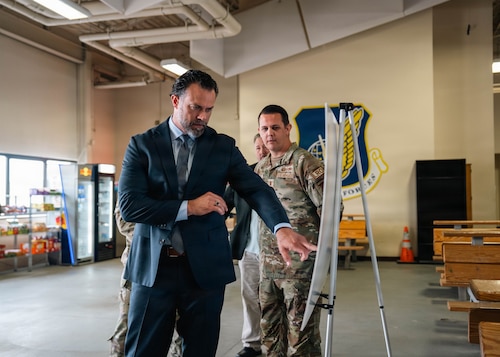
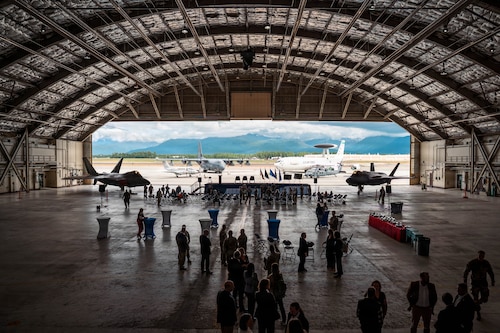
The visit, which included stops at the USAFE-AFAFRICA headquarters, SPACEFOREUR-AF headquarters, 86th Airlift Wing, 603rd Air Operations Center, and 435th Air Ground Operations Wing, provided an opportunity for Lohmeier to meet with command leaders and subject matter experts, who offered insights on current and future missions, challenges and opportunities.
“It’s a true privilege to visit Ramstein and see firsthand all the critical missions they execute in support of our warfighters,” Lohmeier said. “The motivation, service and expertise they display give me confidence our warfighters are ready to fight and win. We, as senior leaders, need to ensure they receive the most technologically advanced capabilities to execute their mission.”
He started the day off with a workout session with SPACEFOREUR-AF Guardians and leadership, reinforcing that maintaining physical standards helps ensure military members are resilient and ready for anything the service demands of them.
“Fitness is part of readiness, and leaders have to set that example,” Lohmeier said. “Whether you are at home station, deployed or on the road, taking care of yourself physically helps ensure you are prepared to lead and accomplish the mission.”
Then Lohmeier received briefings on command missions and current operations. He spoke with U.S. Air Force Lt. Gen. Jason T. Hinds, USAFE-AFAFRICA commander, to discuss how the command defends the strategic approaches to the United States and generates airpower across two continents in support of U.S. European Command and U.S. Africa Command.
“It was extremely valuable to meet with General Hinds to discuss how USAFE-AFAFAFRICA protects the U.S. homeland with our allies and partners,” Lohmeier said. “It is clear that our forces project combat-ready airpower in Europe, Africa and beyond, deter aggression, and are prepared to win decisively should deterrence fail.”
He also joined Airman and Guardians for a working lunch at the installation dining facility where he heard directly about their mission challenges and successes, offering ongoing leadership support as they work to maintain readiness and a focus on warrior culture.
The visit continued with a tour of the Air Defense Operations Center, a first-of-its-kind facility in the Air Force to become operational. The ADOC is designed to detect and counter emerging aerial threats to help subject matter experts build an approach that is catered to those threats and host nation considerations throughout Europe.
Lohmeier finished the visit by meeting with U.S. Space Force Brig. Gen. Christopher Fernengel, SPACEFOREUR-AF commander, to discuss joint warfighting initiatives and integration with other combatant command components. As a rapidly changing warfighting environment unfolds, a shared understanding and collaboration of how space capabilities are planned and employed is critical to the success of the joint force.
Lohmeier’s visit is a part of a larger European area of responsibility immersion to engage with Airmen and Guardians throughout the theater. He also recognized multiple members with coining ceremonies for their exemplary service.
“Readiness starts with our people,” Lohmeier said. “The professionalism and commitment to readiness from the Airmen and Guardians I met at Ramstein today are exactly what our Air Force needs as we prepare to defeat the threats in theater.”
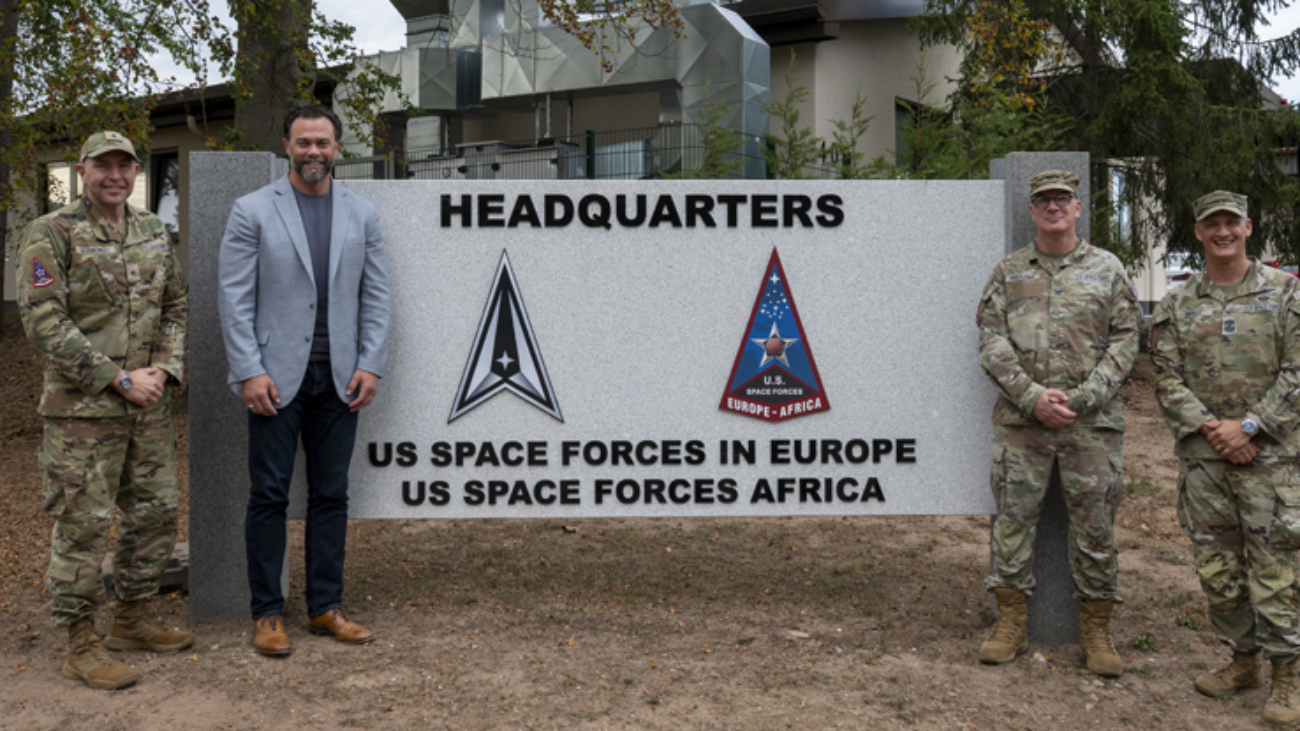
Under Secretary of the Air Force Matt Lohmeier, middle, and his team pose for a group photo with U.S. Air Force Lt. Gen. Jason T. Hinds, U.S. Air Forces in Europe – Air Forces Africa commander, and U.S. Air Force Chief Master Sergeant Joshua J. Wiener, USAFE-AFAFRICA command chief at Ramstein Air Base, Germany, Sept. 24, 2026. During the visit, Lohmeier met with USAFE-AFAFRICA leadership, received operational briefings, and connected with Airmen and Guardians to discuss mission challenges and daily operational readiness. (U.S. Air Force photo by Senior Airman Brenden Beezley)Under Secretary of the Air Force Matt Lohmeier speaks to U.S. Guardians and Airmen during a physical training session at Ramstein Air Base, Germany, Sept. 24, 2026. The session highlighted Lohmeier’s emphasis on fitness as a foundation for readiness, resilience and a warfighter mindset across the Department of the Air Force. (U.S. Air Force photo by Senior Airman Brenden Beezley)
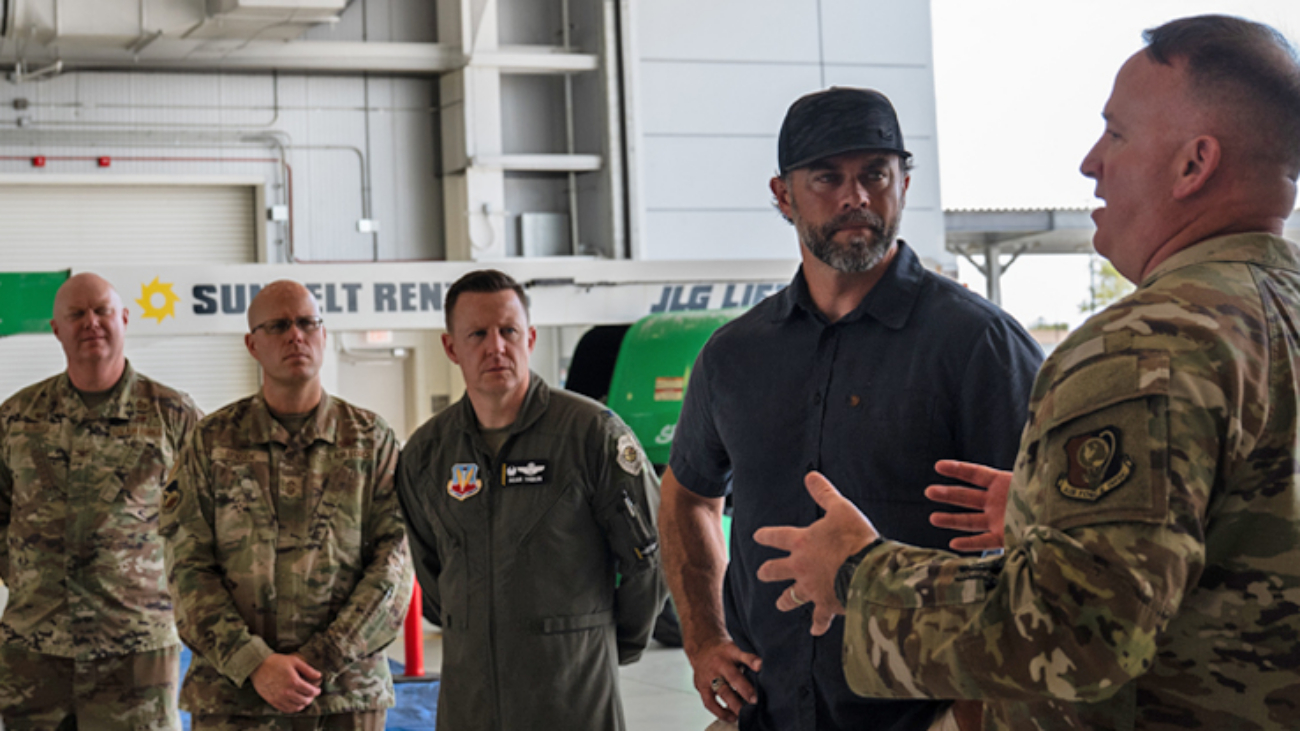
(USAF) Under Secretary of the Air Force Matt Lohmeiervisited Tyndall Air Force Base, Aug. 13, to observe how the 325th Fighter Wing is optimizing operational readiness while simultaneously executing a multibillion-dollar rebuild.
During the immersion, Lohmeier toured key facilities and met with representatives from the Air Force Civil Engineer Center and the Special Programs Division to discuss the strategic vision driving the “Installation of the Future.”
“Readiness starts with a warfighter mindset and a commitment to excellence at every level,” Lohmeier said. “Seeing firsthand how our Airmen at Tyndall maintain high-tempo flight operations amid a massive construction footprint demonstrates the resilience and agility required for high-end conflict. This is one great example of how we project lethal airpower.”
Throughout the day, Lohmeier met with Airmen across the installation to discuss the specific capabilities required to execute the base’s mission.
The visit highlighted Tyndall AFB’s ongoing flight operations, which currently support a mission fleet of 26 F-35A Lightning II aircraft. Lohmeier was briefed on the base’s force generation capabilities and the strategic roadmap to beddown two additional fighter squadrons in the near future.
In discussions with AFCEC and SPD leadership, he reviewed force sustainment efforts designed to maintain long-term operational viability and fortify Tyndall AFB’s infrastructure against future environmental and strategic challenges.
The visit reinforced the department’s commitment to equipping warfighters to accomplish their critical missions. By viewing the seamless integration of flying operations and base reconstruction up close, Lohmeier reaffirmed the strategic value of Tyndall and its personnel in projecting global airpower.
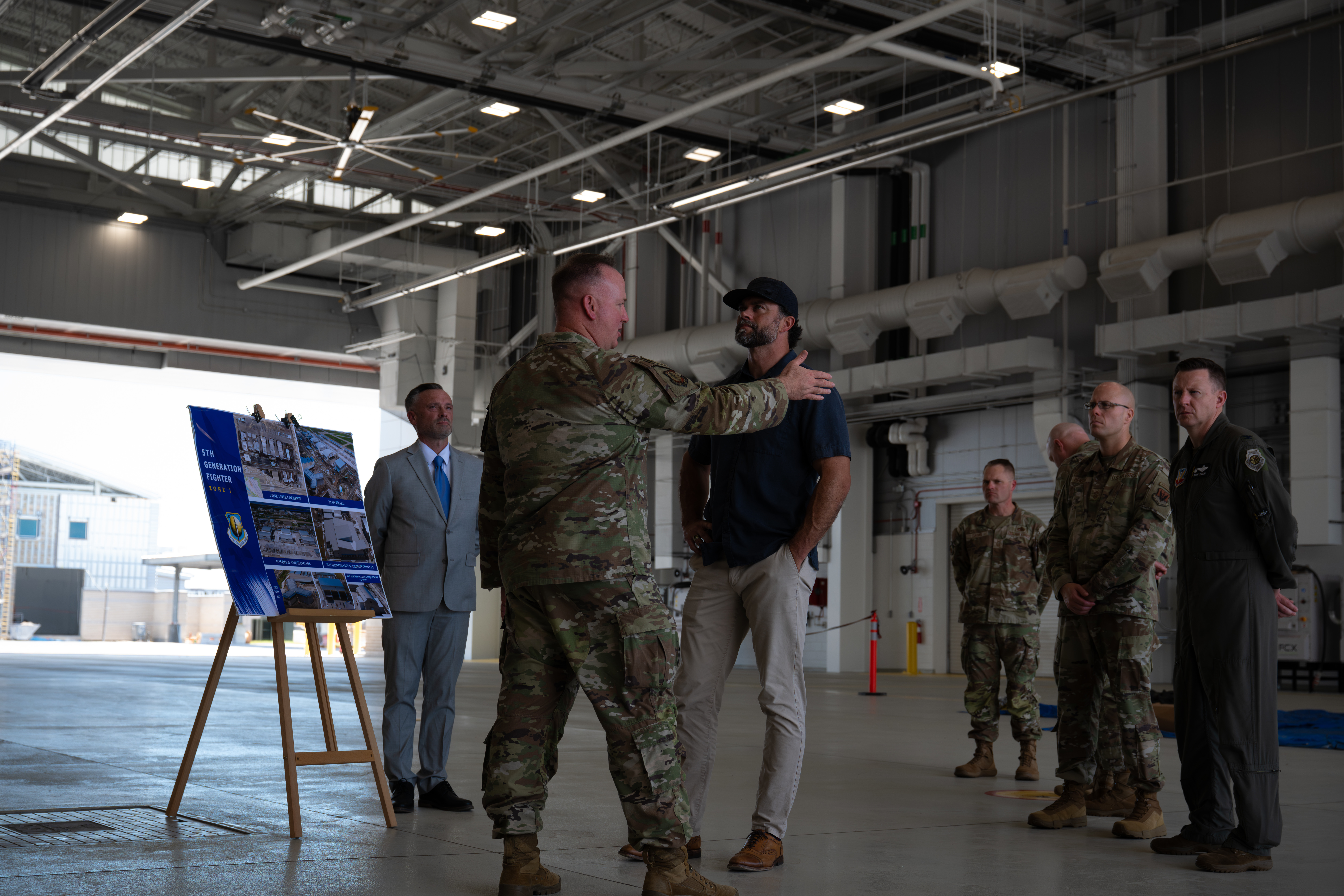
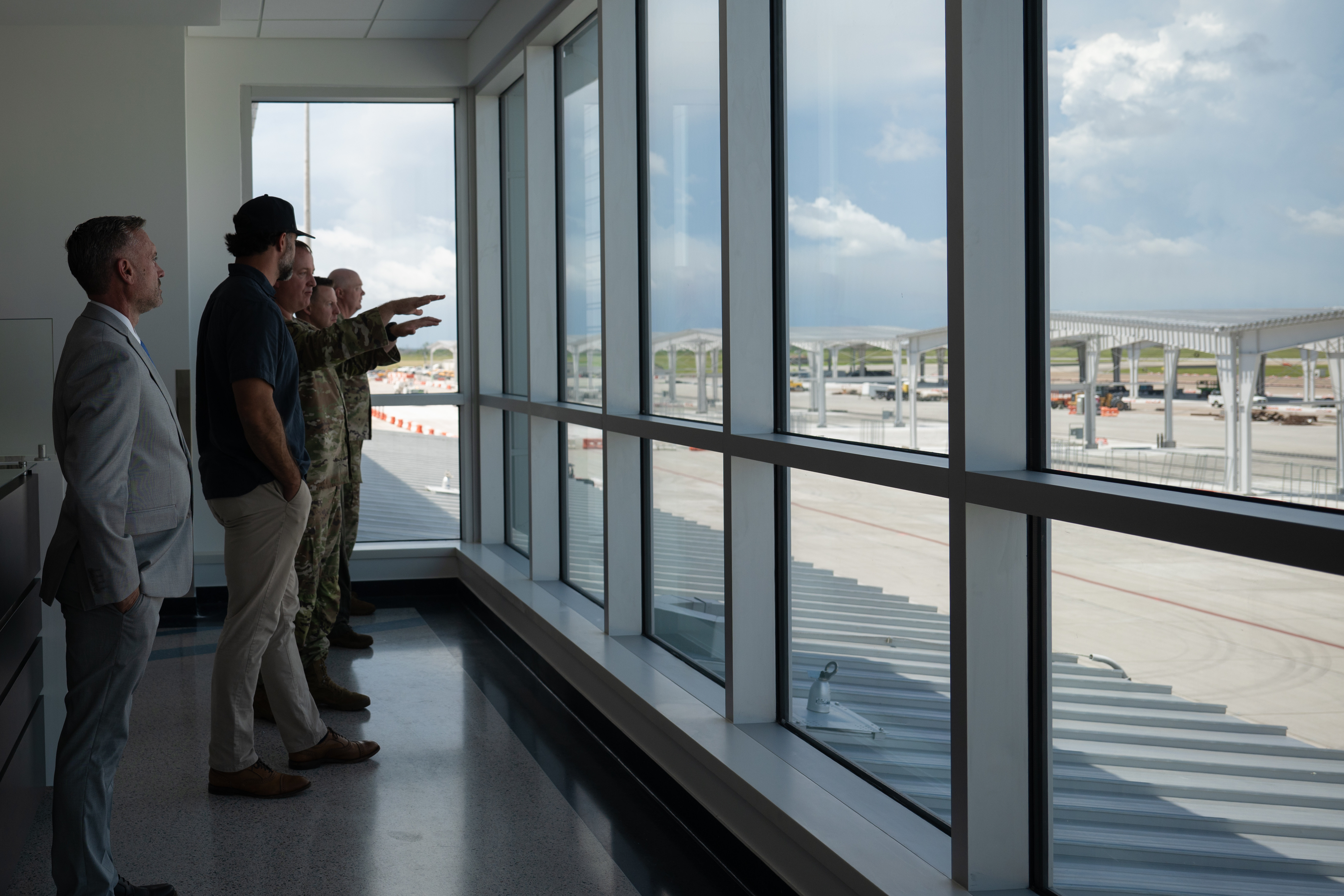
Col. Robert Bartlow, chief of the Air Force Civil Engineer Center’s Special Programs Division, briefs Under Secretary of the Air Force Matt Lohmeier inside a newly constructed aircraft maintenance hangar at Tyndall AFB, Fla., Aug. 13, 2026. During his, Lohmeier toured key facilities and met with base leadership to discuss the strategic vision driving the “Installation of the Future.” (U.S. Air Force photo by Airman 1st Class Rosario Garcia)Tyndall Air Force Base leadership briefs Under Secretary of the Air Force Matt Lohmeier as they observe flightline operations and reconstruction progress at Tyndall AFB, Fla., Aug. 13, 2026. The visit allowed senior leadership to directly evaluate the installation’s strategic reconstruction efforts and operational readiness. (U.S. Air Force photo by Airman 1st Class Rosario Garcia)
(USAF Press Release) Under Secretary of the Air Force Matt Lohmeier implored Airmen to pursue continuous personal growth, authentic leadership and intentional intellectual development during a keynote address at the Air Force Sergeants Association Professional Airmen’s Conference.
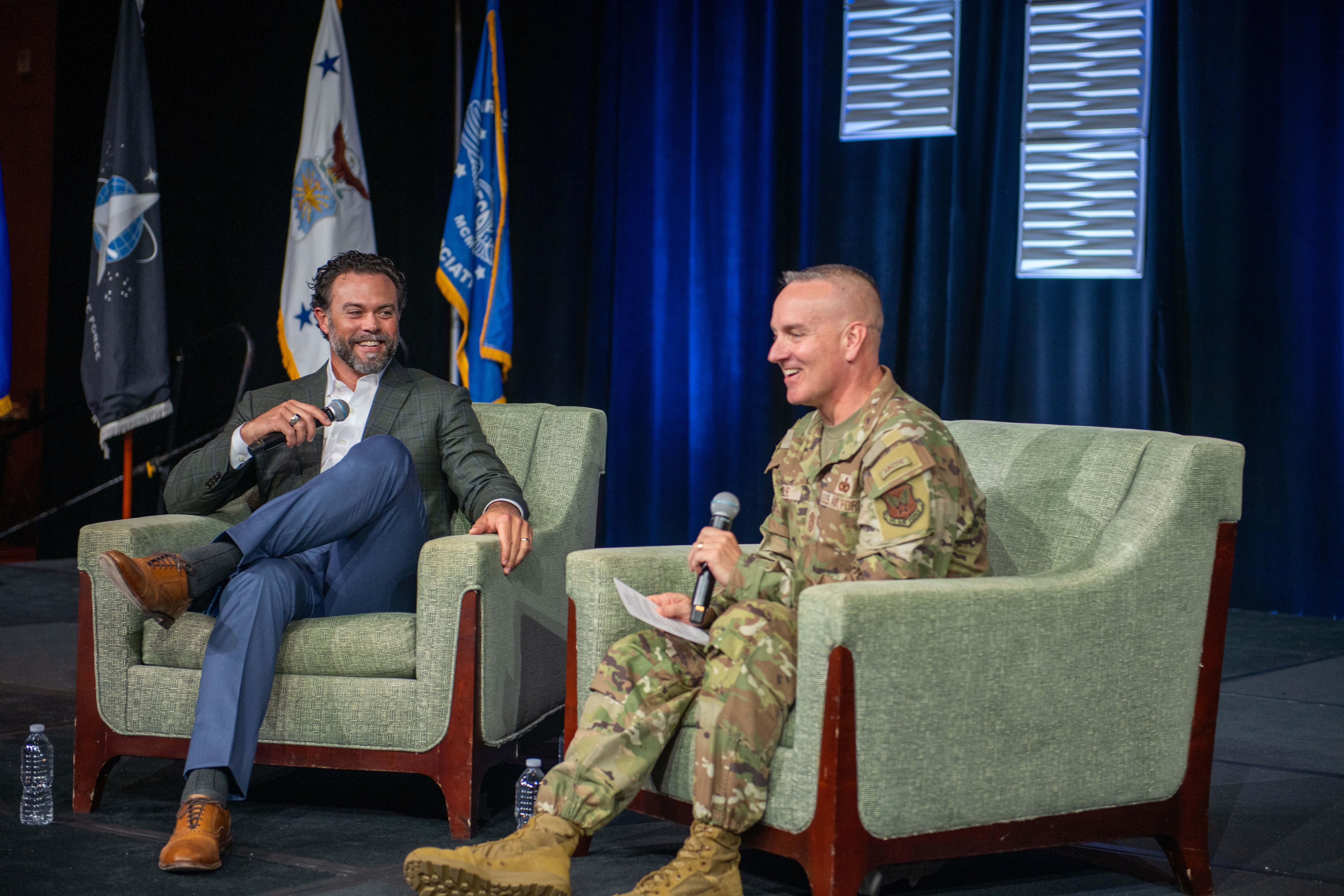
Lohmeier turned directly to the leader he would later share the stage with for a question-and-answer session: Chief Master Sgt. of the Air Force David R. Wolfe. As he centered his remarks on the third edition of Wolfe’s “Why Series” essay on deliberate learning, integrating his own thoughts to illustrate why the Chief’s message resonated deeply with him.
Reading Wolfe’s words aloud to the crowded forum, Lohmeier highlighted a central premise that he believes defines modern military readiness.
“The most decisive advantage is no longer just physical or technological; it’s cognitive,” Lohmeier said, quoting Wolfe’s text.
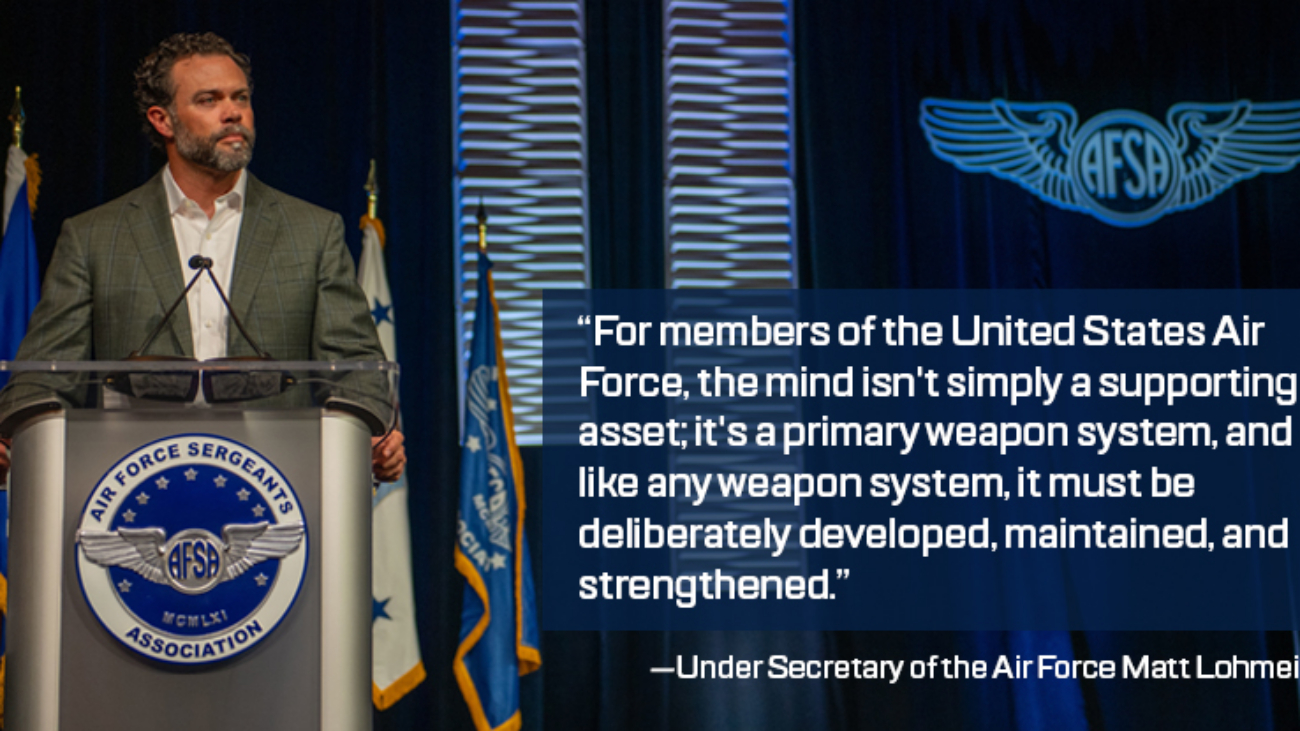
“For members of the United States Air Force, the mind isn’t simply a supporting asset; it’s a primary weapon system, and like any weapon system, it must be deliberately developed, maintained, and strengthened.”
While acknowledging the military’s ongoing efforts to train and adapt to artificial intelligence, Lohmeier put a finer, more human point on the cognitive domain.
“AI will soon do things that even some of our best minds cannot,” Lohmeier said.
“But your minds, your values, and your psyche should be capable of doing things that AI will never accomplish. If we fail to do that, then we are failing as an Air Force, as an institution, and as human beings.”
Lohmeier’s insights are informed by his routine of breaking bread with frontline Airmen during installation visits. Meeting small groups of junior enlisted members for a lunch or breakfast session allows him to use those forums to gather feedback to carry back to the senior leadership team in the Pentagon.
“Overwhelmingly, I have received positive feedback from our youngest Airmen about the NCOs that they work with, our senior NCOs, and their chain of command,” Lohmeier shared.
“One of the things I’ve learned in my time meeting with these Airmen is that they resonate with authentic leadership. They crave authenticity in the workplace.
When they get it, they respond appropriately, and they’ll give you everything that they have to solve the tough challenges we’re facing.”
To illustrate what it means to lead authentically and from the front, Lohmeier—a former fighter pilot and Space Force officer—shared a lighthearted but pointed anecdote from a recent physical training session with student pilots at Vance Air Force Base, Oklahoma.
After a PT session, Lohmeier challenged the attendees to face him in a pull-up competition. Knowing he was facing a younger, more fit Airman, Lohmeier humorously admitted that he turned to “psychological warfare.” He insisted they both jump onto the bar at the same time, allowing Lohmeier to control the pacing.
In Lohmeier’s recounting of the challenge, he described inserting long, agonizing pauses in the hang position and asking his competitor mid-pull-up if he could perform behind-the-neck variations to break his opponent’s focus. His opponent dropped off the bar just one repetition shy of the Under Secretary.
“I share that to say that I think they’re inspired by your examples,” Lohmeier told the conference attendees. “Our Airmen do best when they’re led by NCOs and senior NCOs who are out leading in the front. You need to hold them accountable to the standards that we’ve set. It has to do with leaders and how they lead, serve, and set an example.”
Reading as an act of service
A self-described avid reader, Lohmeier joked that younger Airmen are “big video gamers, but they’re not big readers.” He challenged the audience to reframe reading from a passive, box-checking activity into a critical component of combat readiness and moral character.
He argued that intellectual discipline is directly tied to the Air Force’s first core value: Integrity First.
“Without this disciplined effort to read deeply, it’s not entirely possible to become the most authentic version of yourself,” Lohmeier explained.
“If you’ve not accomplished the work that is necessary to fully develop yourself and fully discover and ground yourself in the values that define you, how can you ever truly have integrity?”
“Rigorous study isn’t just about intellectual stimulation; it’s about values, about character development, and about pursuing the best version of yourself as you lean forward and serve others.”
Lohmeier emphasized that this intellectual preparation is the foundation of military resilience, providing the mental clarity required to withstand disinformation campaigns from adversaries who seek to exploit fear, anger, and historical ignorance.
“As leaders, our job is to foster a culture that values and makes room for continuous learning,” Lohmeier said.
“Organizations that encourage Airmen to invest in their cognitive readiness create a force that is agile, innovative, and prepared—transforming learning from an individual effort into shared strength.”
Following his prepared remarks, Lohmeier was joined on stage by Wolfe for a fireside chat, during which, Wolfe tacked onto the theme of reading, officially announcing the release of his latest reading list, the CMSAF Leadership Library: August 2026.
Lohmeier closed his remarks by giving the conferencegoers a reminder of their influence on the future of the force.
“You are the beating heart of the Air Force,” Lohmeier said. “If I questioned it before this job—and I really didn’t, because I was a squadron commander once too, I truly do believe that you are the beating heart. Your leadership is important, and your personal development is absolutely important as we try and shape the minds and hearts of those that you lead and serve.”
(USAF) Under Secretary of the Air Force Matthew Lohmeier delivered a sobering assessment of the Air Force’s current readiness and a warning about chronic underinvestment.
Lohmeier’s remarks came as one of two keynote addresses during the opening day of Life Cycle Industry Days 2026 held at the Dayton Convention Center, July 27. LCID is presented by the Air Force Life Cycle Management Center.
Despite recent operational successes in operations such as Midnight Hammer, Absolute Resolve and Epic Fury, Lohmeier emphasized that the Air Force must keep iterating toward the future.
Addressing a crowd of senior Air Force uniformed members, veteran civilians and defense industry partners, Lohmeier mentioned famous words once uttered by former Secretary of Defense Donald Rumsfeld: “You go to war with the army you have.”
Despite continued battlefield success and being known as the world’s greatest Air Force, Lohmeier stressed the branch must work harder and faster to counter rapid expansion from adversaries, especially China.
An aging and shrinking fleet
Lohmeier explained that nearly half of the Air Force fleet is over 40 years old and more than 60% of aircraft are more than 30 years old. While KC-135s and B-52s remain lethal, parts to keep an aging fleet flying remain a critical issue.
While the Air Force continues to roll out cutting-edge capabilities like the F-15EX, F-35, B-21 and the first sixth-generation F-47, the overall rate of production and sustainment is failing to keep pace with retirements.
“If we can’t recapitalize our platforms at the rate that we’re forced to retire them, the math is simple: We will continue to get smaller,” Lohmeier said.
A return to the ‘Arsenal of Democracy’
To combat these issues, Lohmeier detailed the Air Force’s new Acquisition Transformation Strategy, a radical departure from traditional procurement methods aimed at shifting the defense industrial base to a “wartime footing.”
Drawing parallels to President Franklin D. Roosevelt’s 1940s radio address calling for an “Arsenal of Democracy” ahead of World War II, Lohmeier emphasized that industrial power and materiel stockpiles are critical warfighting functions.
“We have incredible systems, platforms and munitions … but we need more of just about everything,” Lohmeier explained. “We have to keep the quality, increase the quantity, decrease the cost and accelerate delivery.”
Tangible and intangible changes will contribute to making the acquisition transformation work overall.
One of the largest tangible changes revolves around restructured accountability. Specifically, the creation of Direct Reporting Portfolio Managers and Portfolio Acquisition Executives, moving 85% of contract authority to this level.
Intangible changes revolve around mindset and risk. The biggest is affordable mass. That is, the Air Force must pursue lower-cost munitions for every target.
Lohmeier also noted that an “85% solution in the hands of our armed forces today is infinitely better than an unachievable 100% solution endlessly undergoing testing.”
Lohmeier concluded with a reminder that the old ways are in the past and the Air Force is making the “express lane the new normal.”
This is the 10th edition of LCID. The conference continues July 28 in Dayton.
(USAF Press Release) The Under Secretary of the United States Air Force, Matt Lohmeier, toured Joint Base Elmendorf-Richardson and Eielson Air Force Base, Alaska from June 22 to 24 to identify opportunities for construction and modernization at arctic military installations.
His first-hand experience of key missions across the state is critical for his advocacy of projects totaling nearly $11 billion in the fiscal year 2027 budget request. This investment is essential to enhancing Alaska’s role in homeland defense and power projection throughout the U.S. Pacific Command and the world.
“The strategic value of Alaska cannot be overstated,” Lohmeier said. “As the crossroads of the Arctic and the Pacific, it provides the United States Air Force and the joint force with unmatched reach and unparalleled domain awareness. The work of our military members and the community members who support our bases ensures we are postured to defend the homeland and deter conflict in the Pacific.”
Lohmeier met with active duty, National Guard and Reserve units throughout the state, discussing the capabilities required to execute Pacific Air Forces’ unique missions.
Lohmeier got a look at JBER’s $404 million runway expansion project which will accommodate any airframe and increase operational capacity of flying missions.
Under Secretary of the Air Force Matt Lohmeier operates an Air Force locomotive during a visit to Eielson Air Force Base, Alaska, June 23, 2026. The visit provided an opportunity to observe installation transportation and logistics capabilities that support mission readiness and operations in the Indo-Pacific region. (U.S. Air Force photo by Airman 1st Class Lara Jhane Rabago)“The Air Force is planning to bring in about $7 to $8 billion worth of investment into Alaska during the next five or so years,” said U.S. Air Force Col. Lisa Mabbutt, 673d Air Base Wing and JBER commander. “We will be working very hard to recapitalize infrastructure here on the airfield to ensure that our mission facilities are ready to deter and defeat in the Pacific and in homeland defense.”
A central focus during the visit was Lohmeier’s participation in the Alaska Industry Summit, where he met with state and local leaders, industry representatives, and community partners to discuss military construction priorities and partnership supporting the JBER mission and Alaska’s growing role in national defense at the Alaska Industry Summit.
Under Secretary of the Air Force, Matt Lohmeier, discusses deployment capabilities in the Joint Mobility Complex at Joint Base Elmendorf-Richardson, Alaska, June 22, 2026. Lohmeier toured the installation to meet with service members and assess Arctic operational readiness, strategic modernization plans and future infrastructure investments. (U.S. Air Force photo by Airman 1st Class Keola Vischi)Lohmeier delivered the welcoming and closing remarks at the event, which brought together military stakeholders and JBER leadership with commercial leaders to forge the community partnerships required to execute the planned construction strategy.
During the summit, Mabbutt emphasized the unique processes and resources required to enable partnerships with local commercial leaders. She identified community concerns such as increased demands for childcare, housing and medical services, all needed to sustain a growth of 2,000 joint service members and their families at military installations across the state.
“Our mission readiness doesn’t stop at the front gate; it is directly enabled by the strength and support of our Alaskan communities,” said Mabbutt. “By aligning our infrastructure goals with local economic plans, we ensure that every dollar spent on enhancing our combat capability also creates opportunities for Alaska-based businesses and strengthens the resilience of the entire region.”
The Alaska Industry Summit is held in Hangar 3, at Joint Base Elmendorf-Richardson, Alaska, June 22, 2026. Under Secretary of the Air Force, Matt Lohmeier toured the installation to meet with service members and assess Arctic operational readiness, strategic modernization plans and future infrastructure investments. (U.S. Air Force photo by Airman 1st Class Keola Vischi)
The proposed investment will not only recapitalize aging infrastructure, but it’s a direct commitment to the interconnected ecosystem of readiness in Alaska. By connecting the strategic vision in Washington with the operational realities of the units on the ground, Lohmeier’s visit reaffirmed the Department of War’s focus on the region and the personnel who defend it.
“Alaska remains the cornerstone of our nation’s defense in the Arctic and the Pacific,” said U.S. Air Force Lt. Gen. Robert Davis, Alaskan NORAD Region, Alaskan Command and Eleventh Air Force commander. “The investments being discussed throughout the Under Secretary’s visit are about ensuring our Airmen, Guardians, Soldiers, Sailors and Marines have infrastructure, training and partnerships necessary to generate combat power, defend the homeland and respond to challenges wherever they emerge.”
The visit, which included stops at the AFMC headquarters, Air Force Research Laboratory, and Air Force Life Cycle Management Center, provided an opportunity for Lohmeier to meet with command leaders and subject matter experts, who offered insights on current and future missions, challenges and opportunities.
“It’s a true privilege to visit AFMC and the Airmen and civilians across Wright-Patterson Air Force Base and see firsthand the critical missions they execute in support of our warfighters,” Lohmeier said. “The motivation, service and expertise inherent in the AFMC workforce are paramount to ensuring our warfighters are fully equipped. Our troops deserve the most technologically advanced capabilities to ensure we remain the most powerful Air Force in the world.”
Following a meeting with AFMC leadership, Lohmeier received briefings on command and center missions and current operations. He joined Airmen for a working lunch at the installation dining facility and heard firsthand of their mission challenges and successes, offering ongoing leadership support as they work to maintain readiness and a focus on warrior culture daily.
On day two of his visit, Lohmeier joined Airmen for morning physical training, after which he visited with the science and technology community at the AFRL for discussions on directed energy and ongoing efforts related to future technology threat mitigation and weapons affordability. Afternoon discussions at the AFLCMC focused on future weapon systems, with immersive visits with teams working on the F-47 and Collaborative Combat Aircraft at the Agile Development Office.
Headquartered at Wright-Patterson Air Force Base, Ohio, AFMC manages installation and mission support, discovery and development, test and evaluation and life cycle management services and sustainment for every major Air Force weapon system. AFMC employs nearly 89,000 military and civilian Airmen and manages $80.2 billion of budget authority.
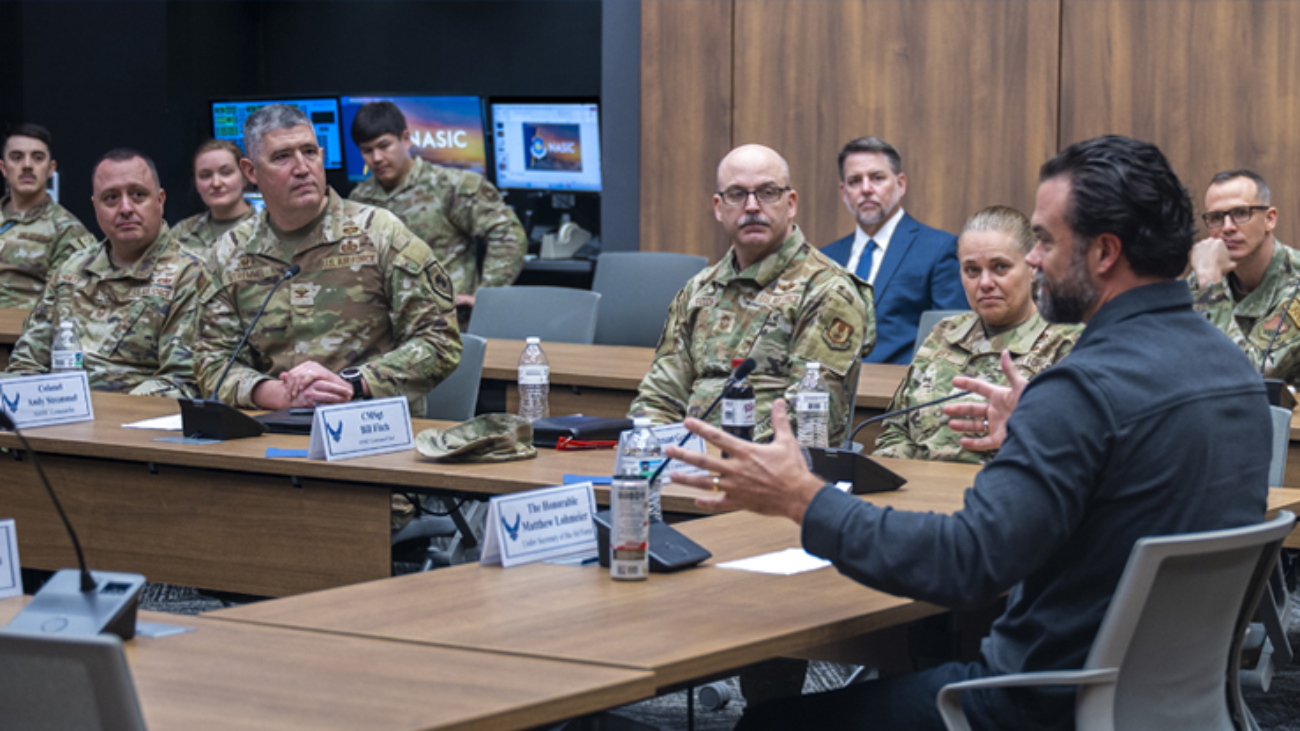
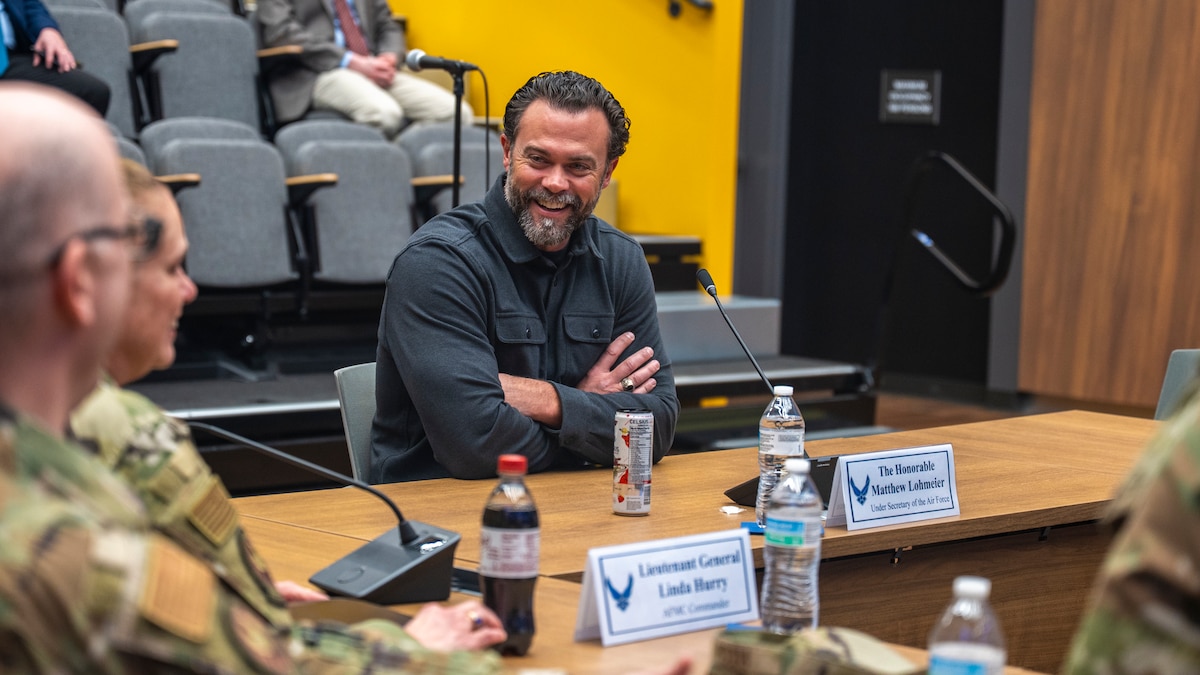
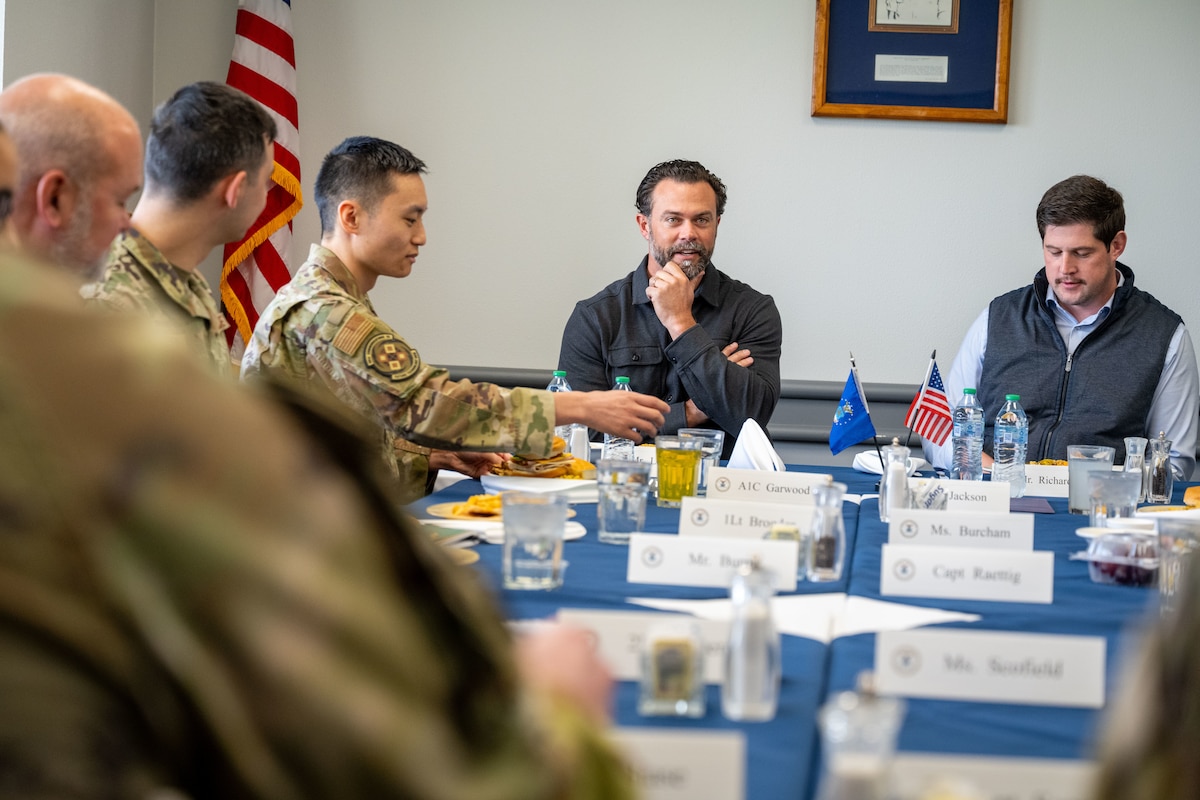
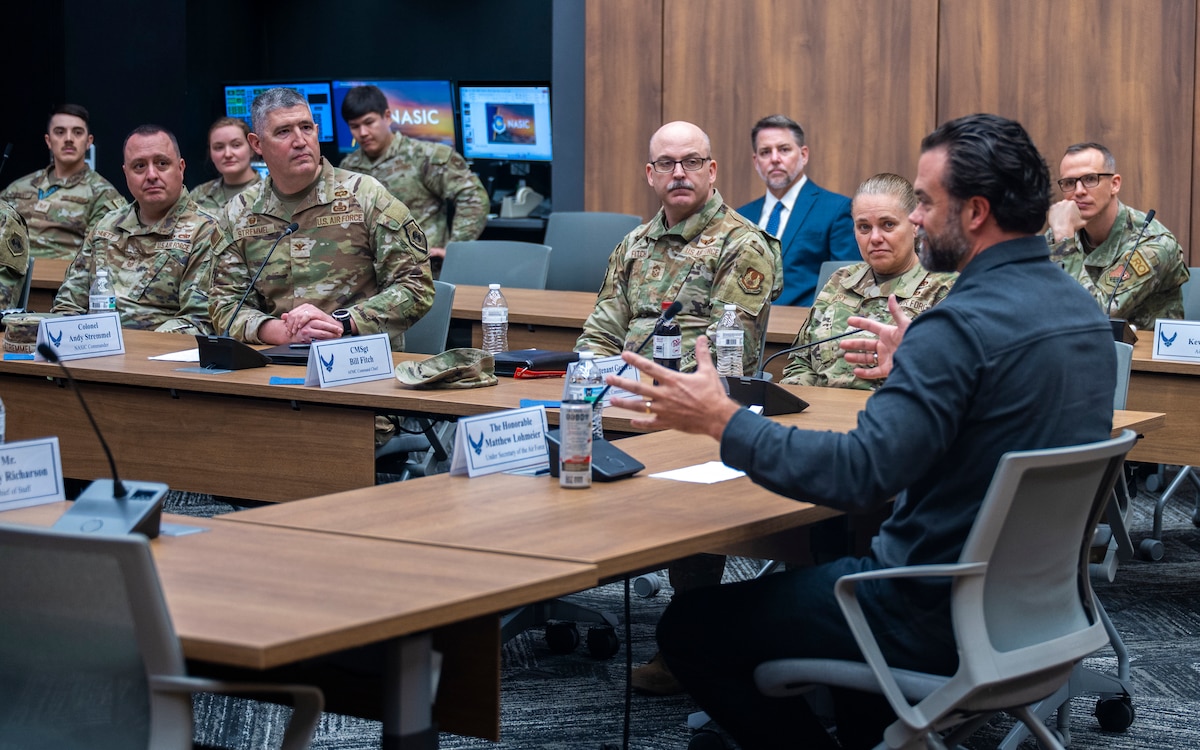
Under Secretary of the Air Force Matt Lohmeier engages in conversation with leadership from Air Force Materiel Command during his visit to Wright-Patterson Air Force Base, Ohio, March 23, 2026. The visit provided an opportunity for Lohmeier to meet with command leaders and subject matter experts, who offered insights on current and future missions, challenges and opportunities. (U.S. Air Force photo by Senior Airman Chevelle K. Gauntlett)Under Secretary of the Air Force Matt Lohmeier enjoys lunch with Airmen and Guardians at the Pittsenbarger Dining Facility at Wright-Patterson Air Force Base, Ohio, March 23. Lohmeier met with Airmen across the country to emphasize the value of direct engagement between senior leaders and the force. (U.S. Air Force photo by Jack Gardner)Under Secretary of the Air Force Matt Lohmeier engages in conversation with leadership from Air Force Materiel Command and the National Air and Space Intelligence Center during his visit to Wright-Patterson Air Force Base, Ohio, March 23, 2026. During the NASIC portion of Lohmeier’s visit, he interacted with the center’s leadership and experts to learn more about its mission and people. (A monitor in this image was masked for security reasons.) (U.S. Air Force photo by Senior Airman Chevelle K. Gauntlett)
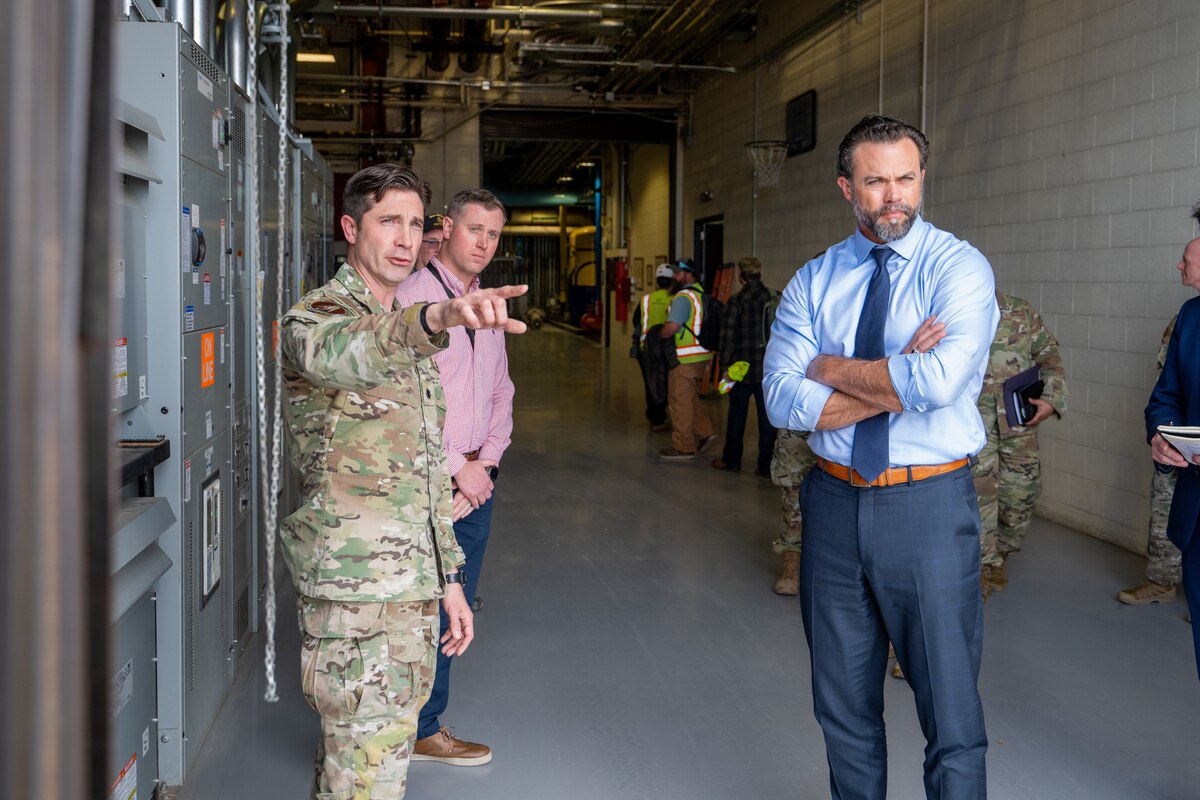
SCHRIEVER SPACE FORCE BASE, Colo. — Under Secretary of the Air Force Matt Lohmeier visited Schriever Space Force Base, Colorado, Feb. 24, 2026, where he met with Guardians, Airmen and civilian teammates supporting space operations missions.
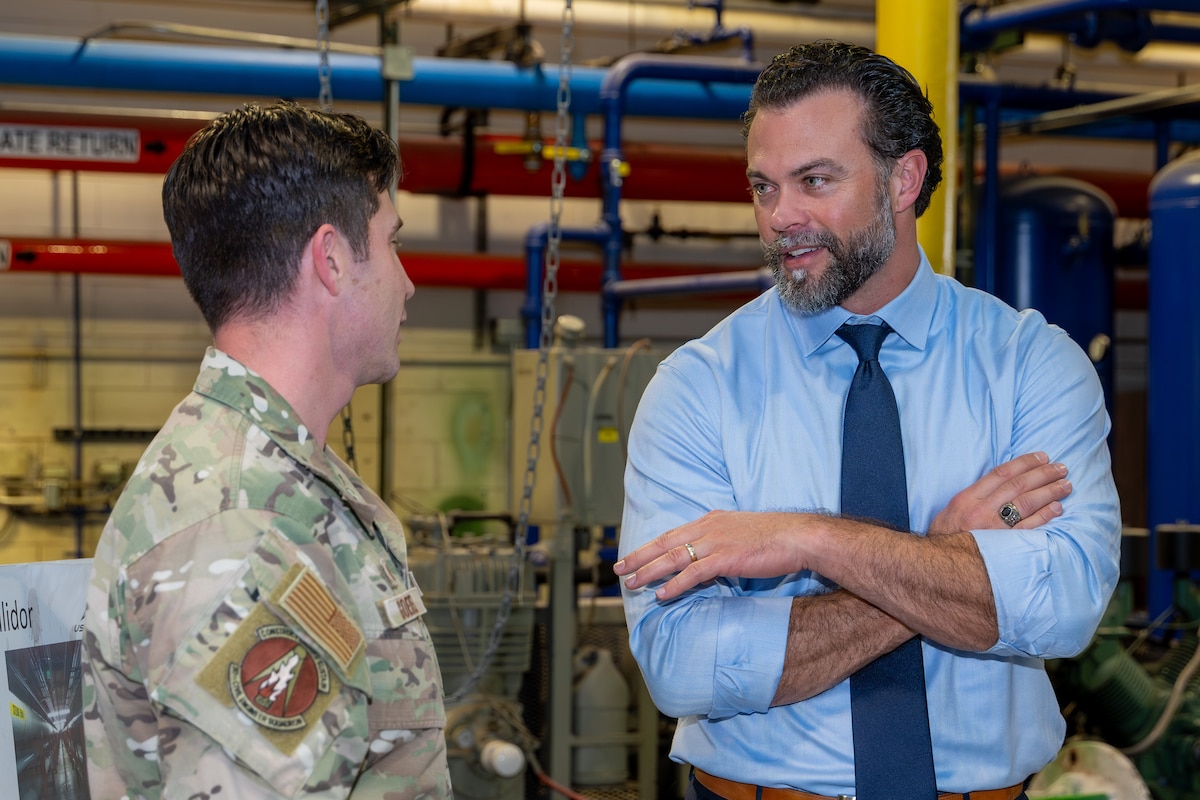
The visit began with Space Base Delta 41 leadership and included a stop at the 50th Civil Engineer Squadron Central Utility Plant, where Lohmeier received a briefing on Weapons System Infrastructure and civil engineering base operating support that enable installation readiness.
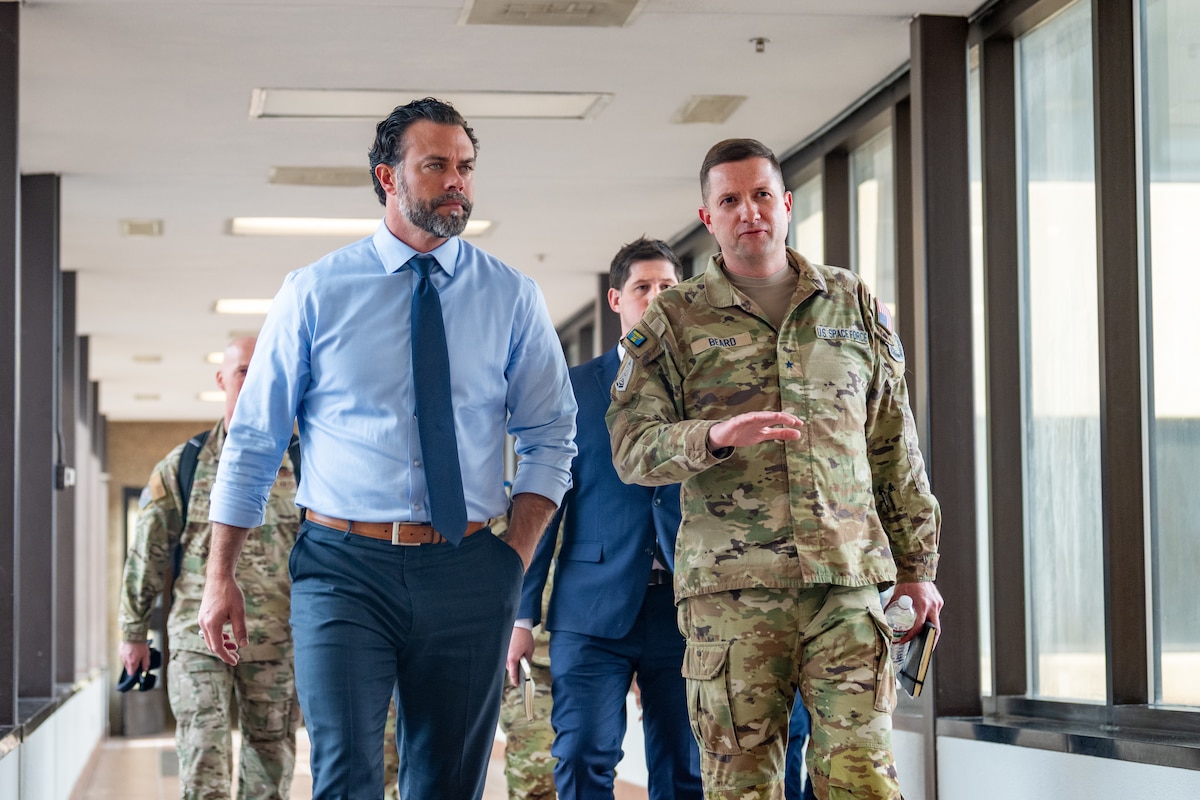
During the visit, Lohmeier also met with U.S. Space Force Combat Forces Command leadership, including USSF Brig. Gen. Casey M. Beard, USSF Combat Forces Command deputy commander, to discuss operational priorities and readiness across the force.
He later visited the National Space Defense Center to review ongoing modernization efforts and operational readiness initiatives.
The NSDC, a subordinate center of U.S. Space Forces – Space, coordinates military, intelligence, civil and commercial space efforts to conduct unified space defense operations.
The visit reinforced the Department’s focus on readiness and supporting the personnel who protect and defend the space domain.
.
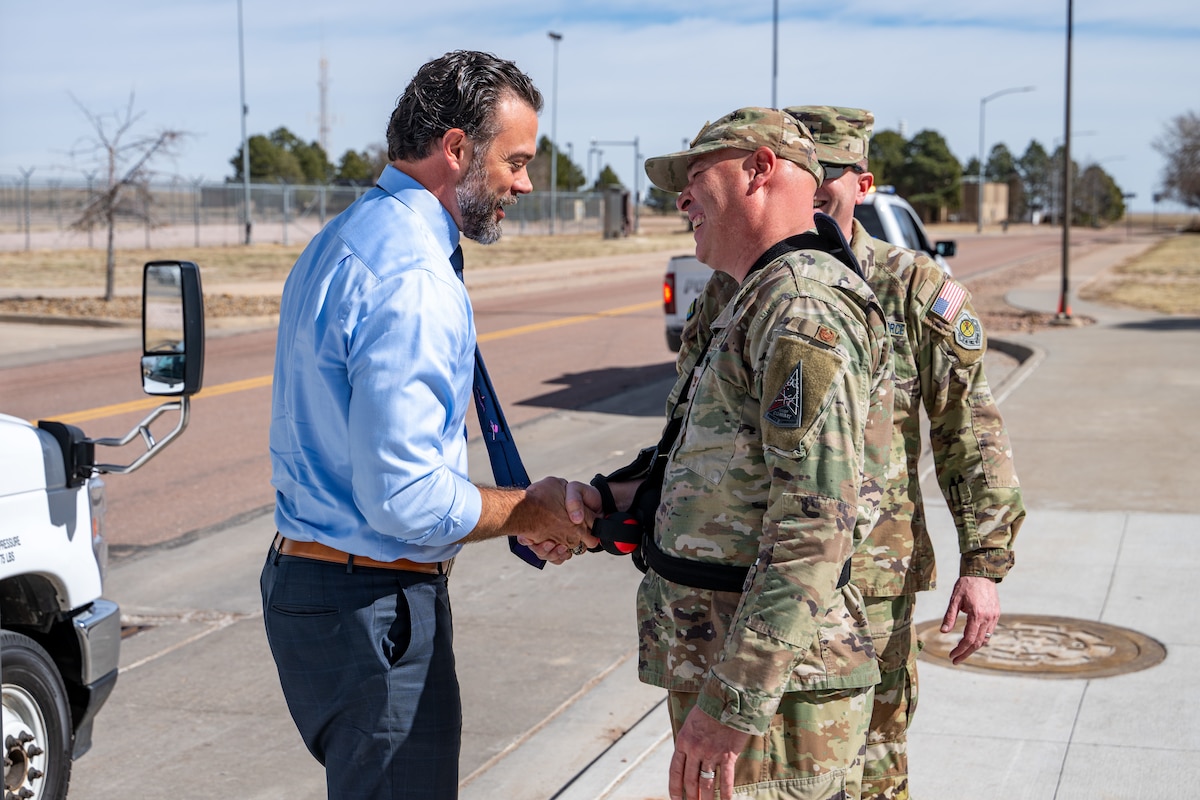
The Honorable Matt Lohmeier, Under Secretary of the Air Force, left, shakes hands with U.S. Air Force Col. David Berrios, Space Base Delta 41 deputy commander, right, during a tour at Schriever Space Force Base, Colorado, Feb. 24, 2026. Lohmeier’s visit aimed to strengthen connections between USecAF leadership and Guardians and Airmen by highlighting USecAF’s investment into the operational culture and supporting our troops in the field. (U.S. Space Force photo by Dalton Prejeant)
U.S. Air Force Lt. Col. Brandon Goebel, 50th Civil Engineer Squadron commander, left, speaks with The Honorable Matthew Lohmeier, Under Secretary of the Air Force, during a tour at Schriever Space Force Base, Colorado, Feb. 24, 2026. During the tour, The Honorable Matthew Lohmeier visited the 50th CES Central Utility Plant and received a brief on Weapons System Infrastructure and civil engineering base operating support. (U.S. Space Force photo by Dalton Prejeant)
U.S. Air Force Lt. Col. Brandon Goebel, 50th Civil Engineer Squadron commander, left, briefs the Honorable Matt Lohmeier, Under Secretary of the Air Force, during a tour at Schriever Space Force Base, Colorado, Feb. 24, 2026. During the tour, The Honorable Matthew Lohmeier visited the 50th CES Central Utility Plant and received a brief on Weapons System Infrastructure and civil engineering base operating support. (U.S. Space Force photo by Dalton Prejeant)
The Honorable Matt Lohmeier, Under Secretary of the Air Force, left, walks with U.S. Space Force Brig. Gen. Casey M. Beard, USSF Combat Forces Command deputy commander, right, during a tour at Schriever Space Force Base, Colorado, Feb. 24, 2026. Lohmeier’s visit aimed to engage with Guardians and Airmen and learn more about updates to the Air and Space Force installations and programs. (U.S. Space Force photo by Dalton Prejeant)
(US Air Force) Senior Department of the Air Force leaders emphasized that warfighting readiness, modernization and investment in Airmen and Guardians remain central to maintaining deterrence and preparing for future conflict during a panel discussion at the Air and Space Forces Association’s 2026 Warfare Symposium Feb. 24.
The panel, titled “Reinforcing Warfighting and Personnel Readiness,” featured Under Secretary of the Air Force Matt Lohmeier; Deputy Chief of Space Operations for Operations Lt. Gen. Douglas Schiess; and Deputy Chief of Staff for Operations Lt. Gen. Case Cunningham.
The leaders discussed how the Air Force and Space Force are aligning resources, culture and operational priorities to ensure forces remain ready to fight tonight while building capabilities for tomorrow.
Lohmeier opened the discussion by stressing that every effort across the DAF must directly contribute to combat effectiveness.
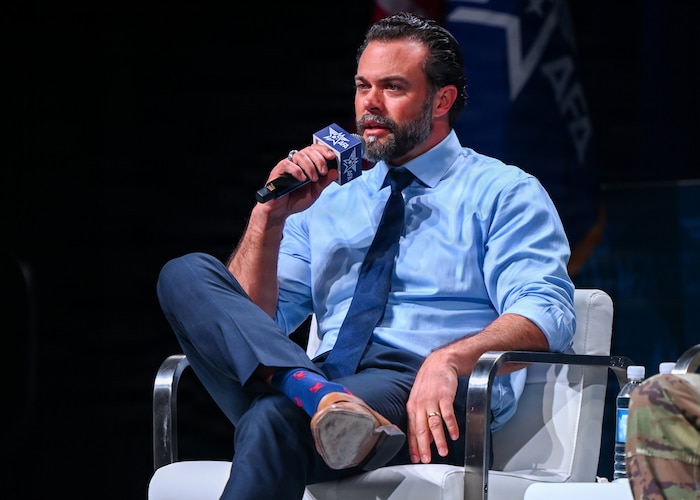
Under Secretary of the Air Force Matt Lohmeier speaks at a panel at the Air and Space Forces Association Warfare Symposium in Aurora, Colo., Feb. 24, 2026. The panel discussed reinforcing warfighting and personnel readiness. (U.S. Air Force photo by Tech. Sgt. Stuart Bright)
“Everything we are doing in the Department of the Air Force must be viewed through the lens of warfighting readiness and lethality,” Lohmeier said, noting that modernization, readiness and people remain the department’s enduring priorities.
Lohmeier said readiness and modernization should work together rather than compete for resources. Department leaders are restoring critical readiness funding, such as sustainment, maintenance and flying-hour programs, to keep forces prepared for current operations while developing future capabilities.
Lohmeier added that acquisition reform and closer collaboration with industry are helping accelerate capability delivery to warfighters by encouraging competition and enabling faster technological updates without restarting lengthy certification processes.
“We’re incentivizing competition in ways we haven’t before,” Lohmeier said, describing efforts designed to deliver operational advantages more quickly to Airmen and Guardians.
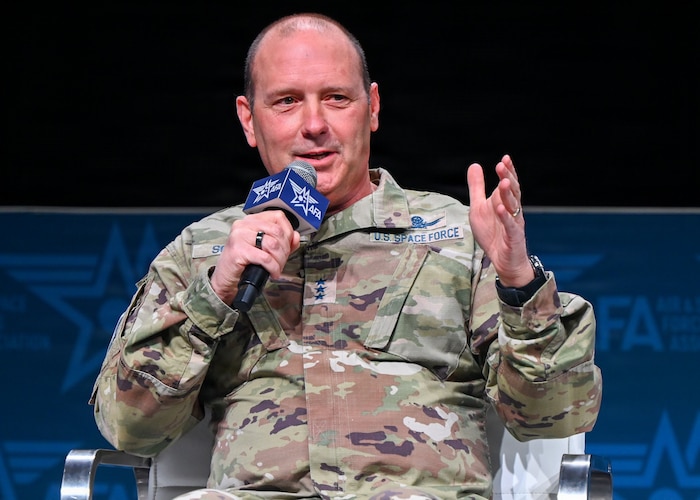
Schiess highlighted the Space Force’s role in achieving space superiority and enabling joint force operations, emphasizing that readiness in the space domain depends equally on technology, training and personnel development. Space superiority ensures U.S. forces can operate freely in space while denying adversaries the same advantage, Schiess said.
“We have to be able to do anything we want to in our domain, on our time frame, whenever our nation calls us,” Schiess emphasized.
Deputy Chief of Space Operations for Operations Lt. Gen. Douglas Schiess speaks at a panel at the Air and Space Forces Association Warfare Symposium in Aurora, Colo., Feb. 24, 2026. The panel discussed reinforcing warfighting and personnel readiness. (U.S. Air Force photo by Tech. Sgt. Stuart Bright)
Schiess said the Space Force is evolving beyond legacy force generation models by implementing advanced training designed to prepare Guardians for contested environments. These efforts include expanded exercises and readiness cycles focused on high-end conflict scenarios rather than routine operations.
As mission demands grow, the service must expand its force structure, training pipelines and infrastructure while continuing close integration with Air Force partners, Schiess said.
“It’s an incredible time to be a part of the Space Force,” Schiess said, pointing to increased investment and new missions supporting joint operations.
Cunningham reinforced that readiness ultimately begins with people and leadership at the unit level, emphasizing the importance of empowering commanders and ensuring Airmen have the resources needed to succeed.
“Readiness is Airmen, by definition,” Cunningham said, adding that leaders must clearly articulate risk, advocate for resources and maximize the capabilities available today across the Air Force.
Cunningham identified defending the homeland, deterring China and maintaining global responsiveness as guiding priorities shaping operational readiness decisions across the force.
Cunningham also highlighted modernization initiatives designed to connect today’s operational force with emerging capabilities, ensuring new systems reach warfighters faster.
Deputy Chief of Staff for Operations Lt. Gen. Case Cunningham speaks at a panel at the Air and Space Forces Association Warfare Symposium in Aurora, Colo., Feb. 24, 2026. The panel discussed reinforcing warfighting and personnel readiness. (U.S. Air Force photo by TSgt. Stuart Bright)
“The requirement for all of us to be as ready as we can be with the resources we have tonight will continue to be a drumbeat,” Cunningham said.
Throughout the discussion, Lohmeier emphasized that culture and leadership remain foundational to sustaining readiness, noting that strong morale across the force reflects leaders who remain focused on mission execution and taking care of personnel.
“A mantra in and of itself is insufficient to change a culture,” Lohmeier said. “You go beyond the mantra, and match word and deed, and you get the right leaders in the right places at the right time.”
Closing the session, Lohmeier said the department is facing a pivotal moment marked by evolving threats and new opportunities to strengthen readiness alongside allies and partners.
“We’ve got once-in-a-generation opportunities to accelerate our progress,” Lohmeier said.
.
USECAF Matthew Lohmeier Talks Culture and Core Values
Under Secretary of the Air Force Matt Lohmeier, at the Air & Space Forces Symposium:
“Getting the right leaders in the right places at the right time–that’s the single most important thing we do to motivate cultural change, eliminate distractions and get people completely focused on accomplishing the mission…
The focus on warrior ethos really matters and getting the right leaders in the right seats matter because they are what drive that cultural change.”
Watch:
.
USECAF Matthew Lohmeier Talks Culture and Core Values
The visit capped a weeklong engagement that included stops at Joint Base Pearl Harbor-Hickam, Hawaii, Osan AB, South Korea, and Yokota AB, Japan, where Lohmeier met with Airmen, Guardians and senior leaders to assess readiness, connect with the force and reaffirm the Department of the Air Force’s commitment to a free and open Indo-Pacific.
“It’s a privilege to visit the Pacific, where readiness and deterrence are tested every day,” Lohmeier said. “This trip was about listening to our Airmen, understanding their challenges firsthand and ensuring they have the tools and support to continue generating combat-ready forces.”
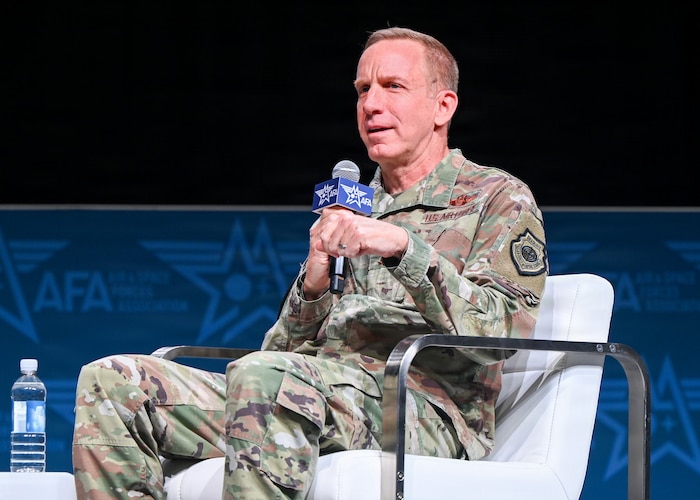
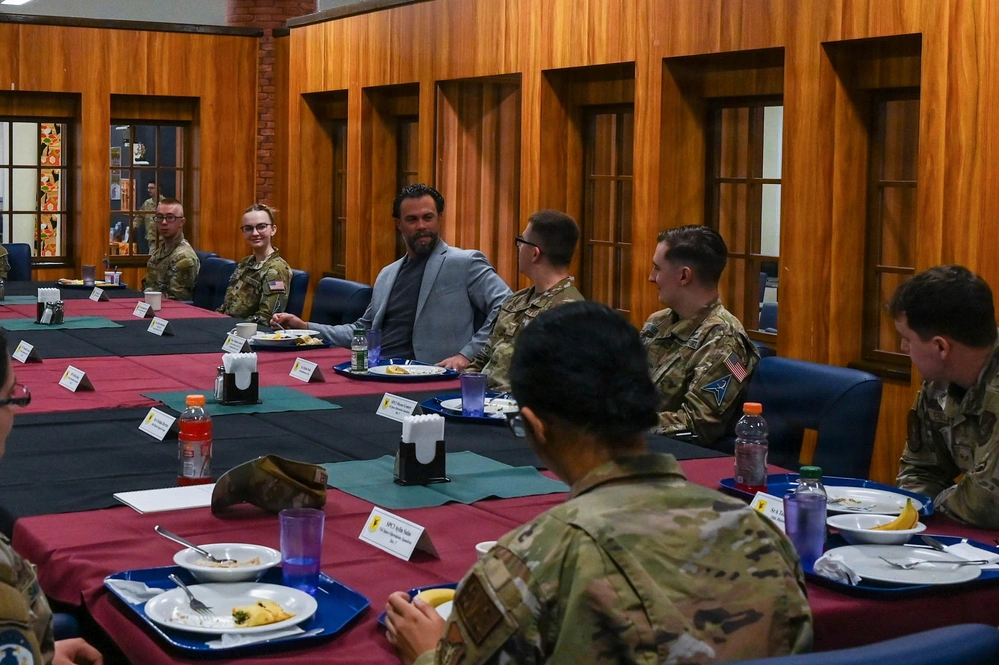
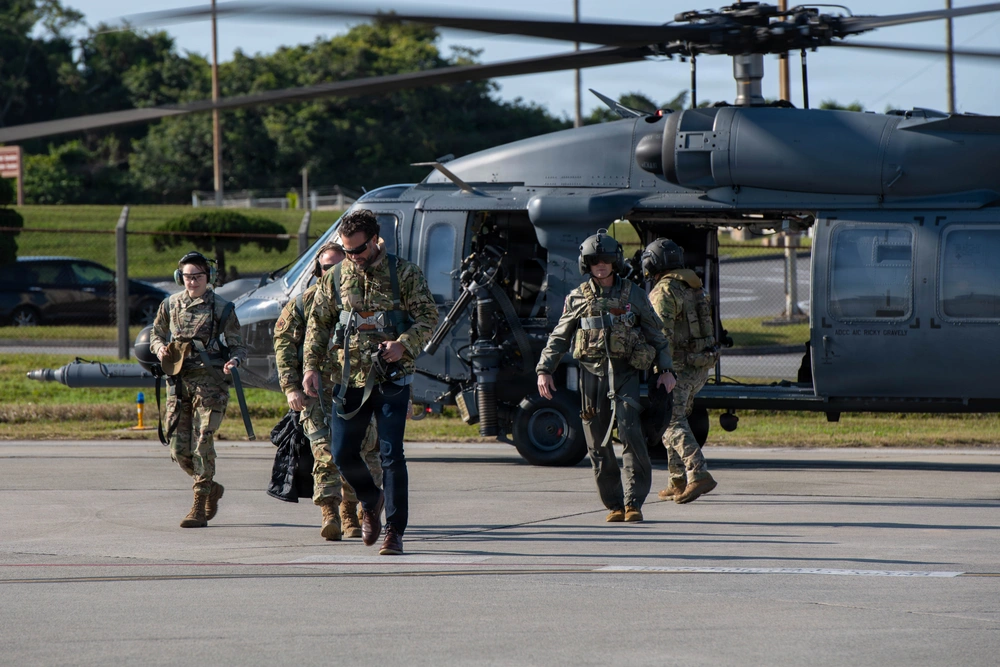
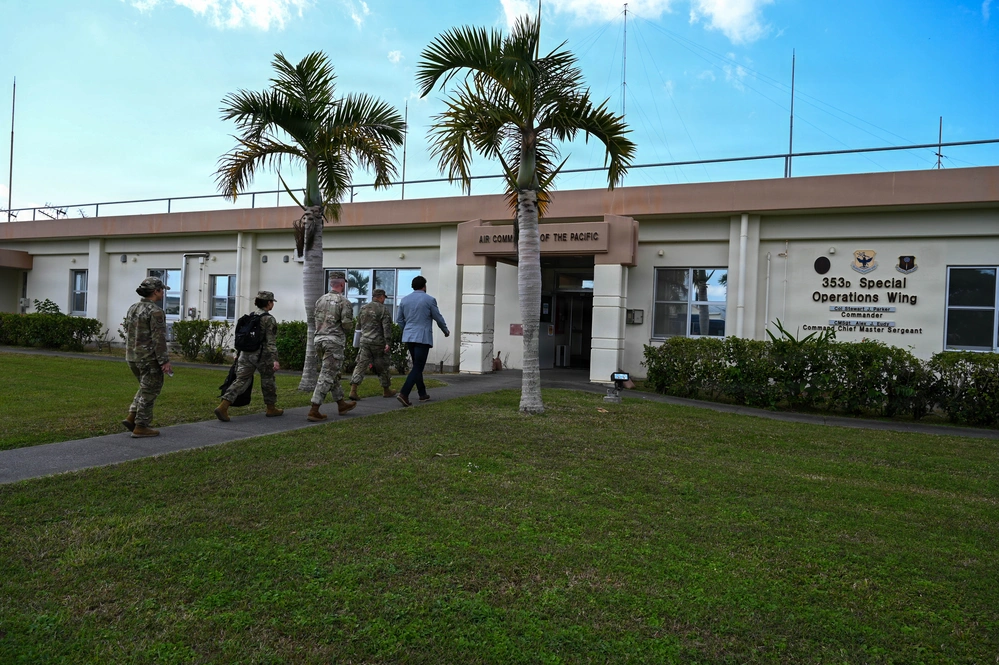
During his visit to Kadena AB, Lohmeier met with Brig. Gen. John Gallemore, 18th Wing commander, and Chief Master Sgt. Will Cupp, 18th Wing command chief, for discussions on operational readiness, force sustainment and quality-of-life initiatives that enable the base’s mission.
“Hosting the Under Secretary allows us to demonstrate how Team Kadena generates combat-ready Airmen and aircraft every day in support of the Pacific Air Forces mission,” Gallemore said. “Our discussions centered on readiness, installation capabilities and the programs that empower our Airmen to sustain forces forward: assuring our allies and deterring adversaries and ensuring a free and open Indo-Pacific.”
Lohmeier also toured key facilities across the installation, including maintenance and operations units, to speak directly with Airmen who sustain the Air Force’s largest combat wing.
“Having senior leadership here shows our Airmen that their work matters to the overall mission,” Cupp said. “It’s meaningful when leaders see firsthand how daily mission execution contributes to deterrence and stability across the region.”
Throughout his Pacific tour, Lohmeier emphasized the importance of collaboration between Airmen, Guardians and allies across the theater. From Hickam’s command and control operations, to Osan AB’s forward defense posture, to Yokota AB’s mobility hub and Kadena AB’s power projection mission, each installation plays a vital role in ensuring the U.S. and its allies remain ready to respond to any contingency.
“Across the Indo-Pacific, I’ve seen the professionalism and commitment of our Airmen and Guardians on full display,” Lohmeier said. “Their work underscores America’s enduring commitment to regional stability and our shared vision of a free and open Indo-Pacific.”
Lohmeier’s visit reaffirmed the Department of the Air Force’s focus on readiness, resilience, and partnership across the Pacific. As the Keystone of the Pacific, Kadena AB continues to stand at the forefront of that mission: deterrence through strength, advancing warfighting capabilities and standing ready to defend our allies and partners.
(US Air Force) Under Secretary of the Air Force Matt Lohmeier arrived at Joint Base Pearl Harbor-Hickam Jan. 24 to kick off his tour of the Pacific Air Force’s area of responsibility and meet with Airmen and Guardians throughout the region.
Lohmeier’s visit was an in-depth immersion to how the Department of the Air Force enhances regional stability by working in concert across all warfighting domains.
The visit is focused on seeing department priorities of modernization, readiness and people in action across the Pacific. Additionally, it highlights the United States’ ongoing commitment to its allies and partners.
“I am thrilled to engage with our personnel here in the Indo-Pacific,” Lohmeier said. “
These discussions inform how to better resource and equip our warfighters to accomplish their critical mission alongside our allies and partners. The motivation, sacrifice, and service I see here are a tangible example of our commitment to maintaining a strong deterrent presence in the Indo-Pacific.”
Gen. Kevin Schneider, PACAF commander, said Airmen in the region are forging peace through strength in the Indo-Pacific by providing a credible deterrent force that makes it clear to any adversary that aggression will fail.
“Our strength is rooted in the professionalism and readiness of our Airmen alongside the power of the joint force and integration with allies and partners,” he said.
“Our team is finding ways where we continuously improve our positions, our capabilities, and our ability to adapt ahead of what a potential adversary is doing. We are achieving that by staying focused on modernization and readiness and having a deep commitment to our greatest asset — our warfighters. They are at the center of everything we do.”
While in Hawaii, the under secretary’s visit will include meetings with leadership from Pacific Air Forces, U.S. Space Forces – Indo-Pacific, and U.S. Indo-Pacific Command where he will receive a strategic overview of joint operations in the region.
He will meet with the Airmen and Guardians executing the mission while highlighting the unique and impactful aspects of the command, its installations and the surrounding communities. He is also scheduled to stop in the South Korea and Japan during his time in the region.
Under Secretary of the Air Force Matt Lohmeier speaks with Airmen from the 15th Wing during an all-call at Joint Base Pearl Harbor-Hickam, Hawaii, Jan. 26, 2026. Lohmeier’s visit is focused on engaging with Airmen and Guardians executing the mission across the Indo-Pacific, while also understanding the region’s operational challenges. (U.S. Air Force photo by Staff. Sgt. Makenna Patterson)
(US Air Force) Under Secretary of the Air Force Matthew Lohmeier visited Osan Air Base, Republic of Korea, Jan. 30, 2026, marking his second stop as a part of his tour of the Indo-Pacific bases.
The visit reinforced the Department of the Air Force’s focus on readiness across the force and its continued investment in the people, programs, and culture that enable Airmen and Guardians to execute the mission.
“The level of detail and discipline that goes into planning and executing the mission here is impressive,” said Lohmeier. “Being forward-postured in this region places Osan at the heart of deterrence, and their readiness is critical to protecting our nation and preventing conflict.”
During his visit, Lohmeier engaged with Airmen and Guardians alongside senior leaders from Seventh Air Force, the 51st Fighter Wing and Space Forces Korea, gaining firsthand insight into how Osan sustains combat power day to day. His engagements included tours of the 51st Medical Group, the base fitness center, and Super Squadron operations, where he observed how individual readiness supports sustained mission execution.
The tours further highlighted Osan’s ability to adapt and grow through initiatives such as the integration of Super Squadrons and tour normalization, reflecting how readiness is built over time through people, stability and culture.
“Osan’s mission demands constant readiness, and that starts with taking care of our Airmen and giving them the tools they need to succeed,” said U.S. Air Force Col. Ryan Ley, 51st Fighter Wing commander. “Everything we do, from the Super Squadron test to tour normalization, is to ensure that our Airmen and units are ready to respond quickly and decisively.”
Throughout his tour, Lohmeier emphasized that readiness is a daily commitment shaped by leadership and mindset. His visit to Osan showcased how disciplined teams, engaged leaders and professional Airmen translate that commitment into sustained combat capability.
“Readiness isn’t something you turn on in a crisis, it’s built every day through leadership, feedback and accountability,” stated Lohmeier.
“Hearing directly from Airmen and Guardians about what’s working and what needs improvement helps us make real changes, strengthening the force and ensuring we’re prepared to respond when called.”
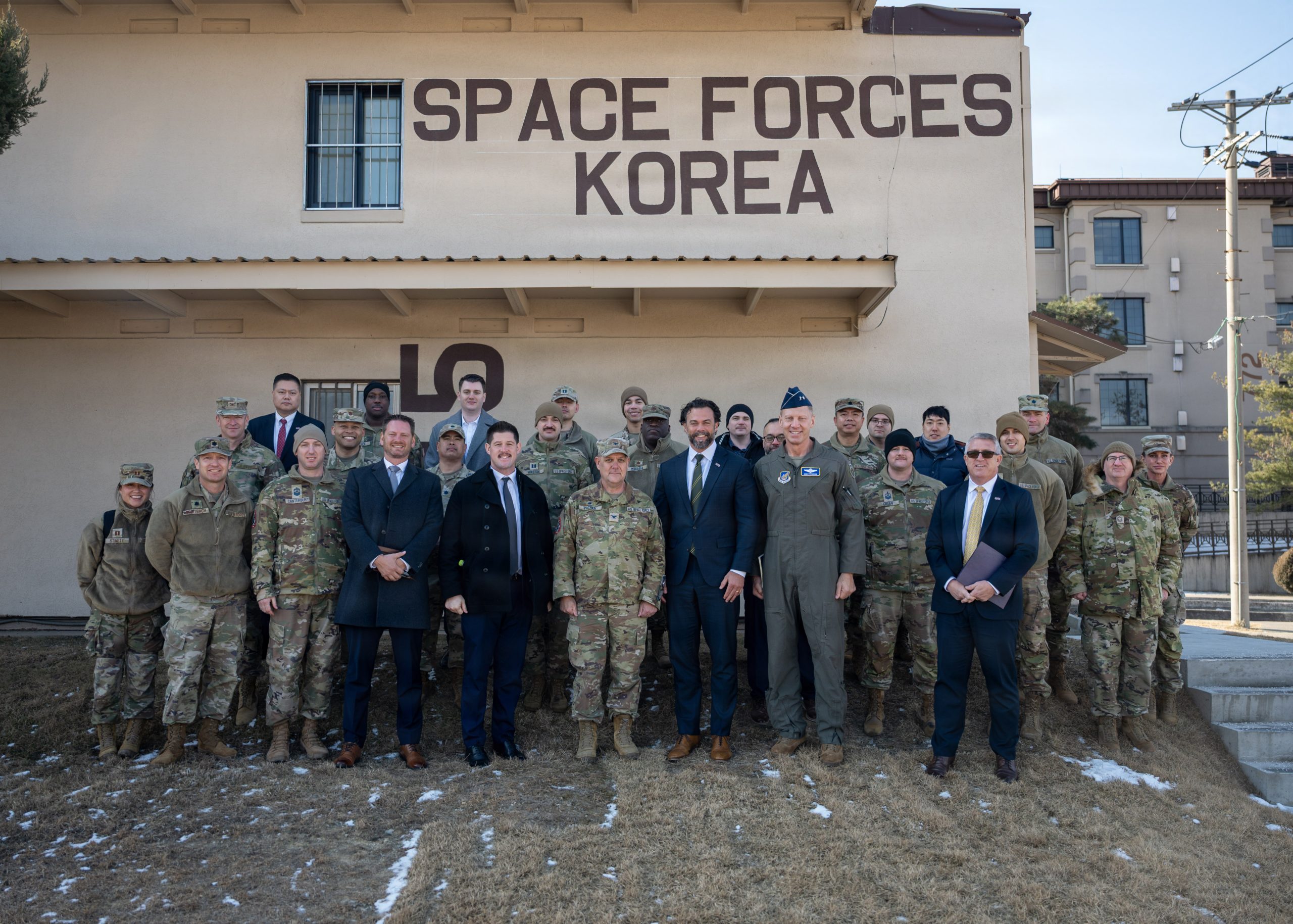
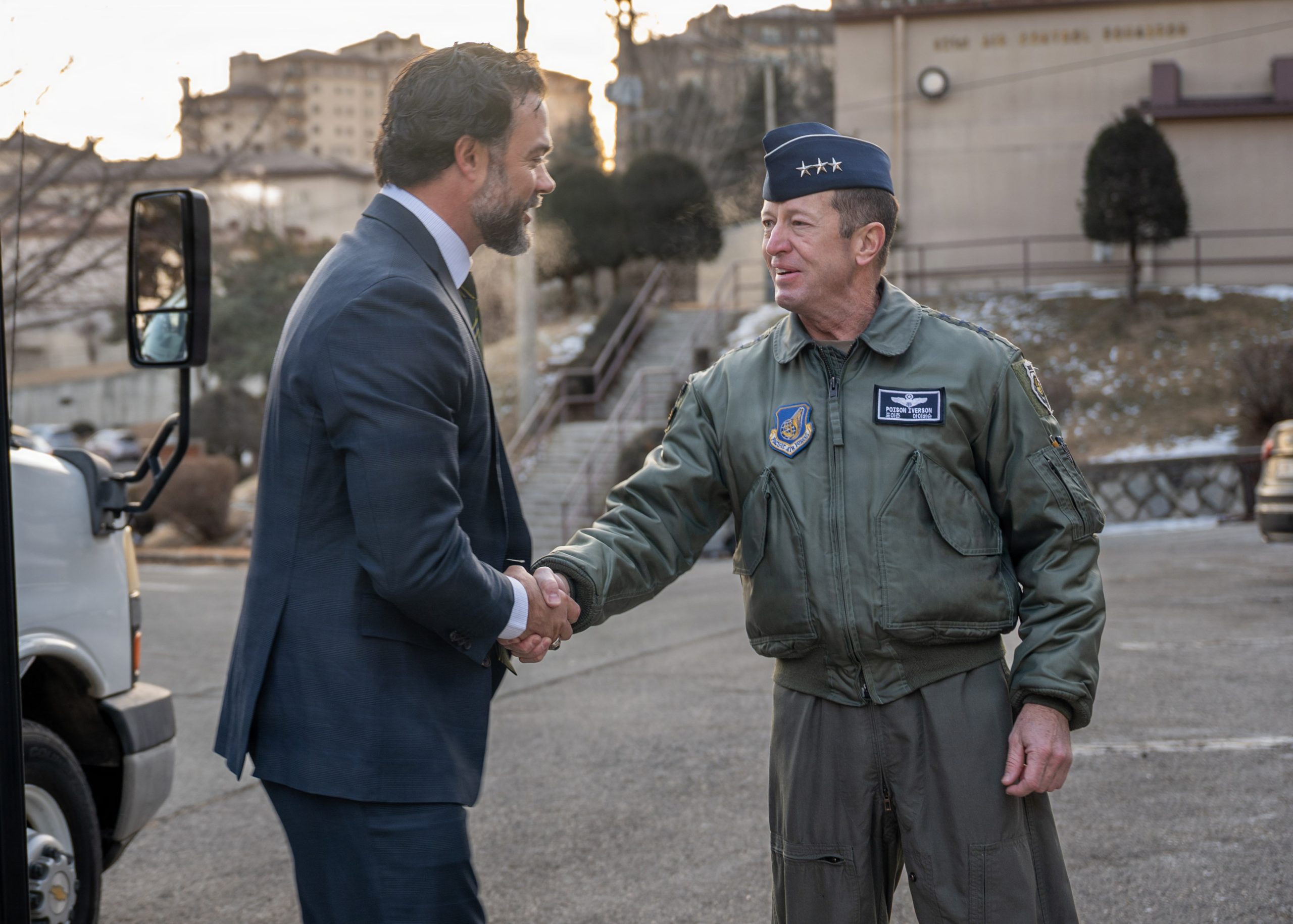
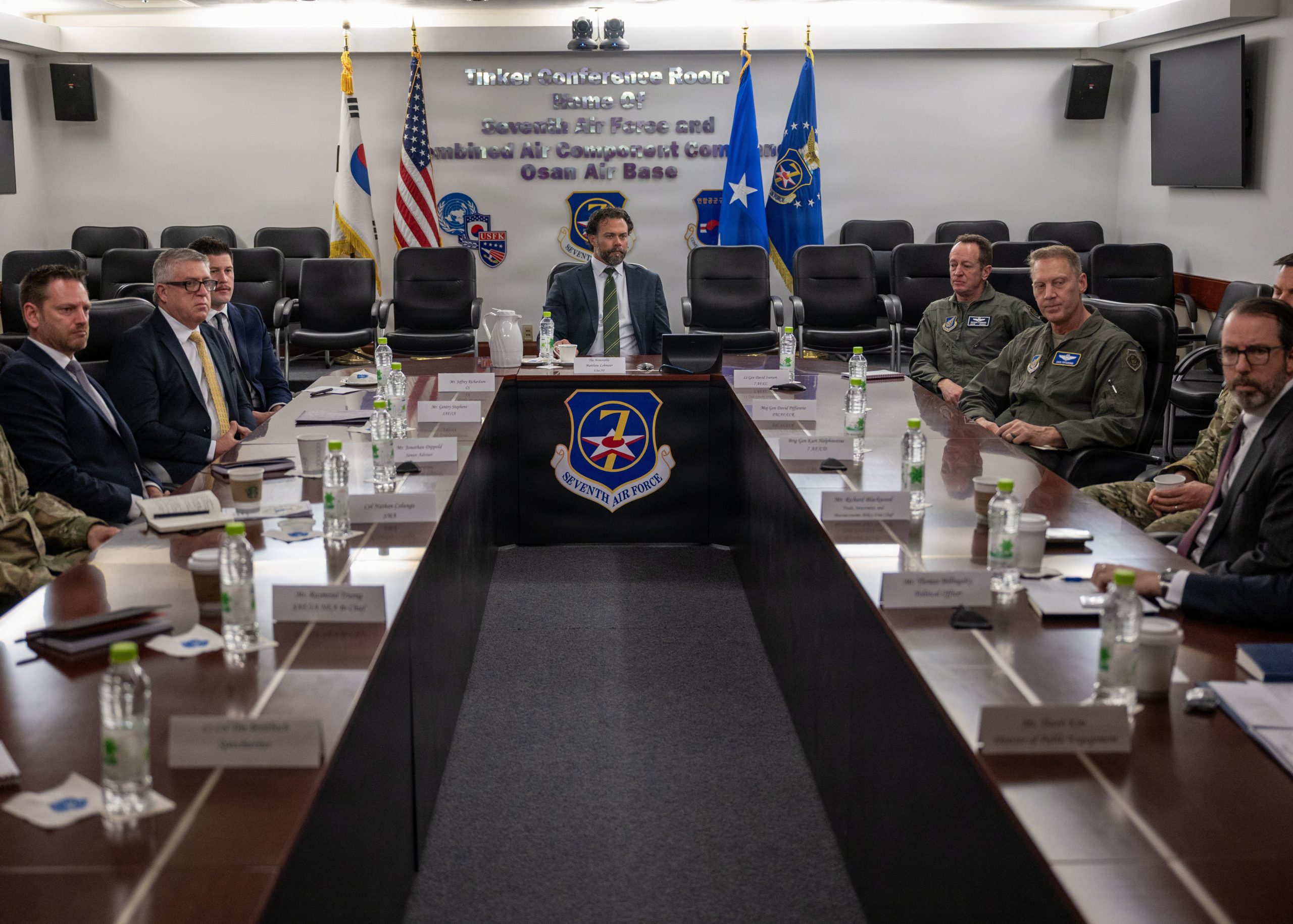
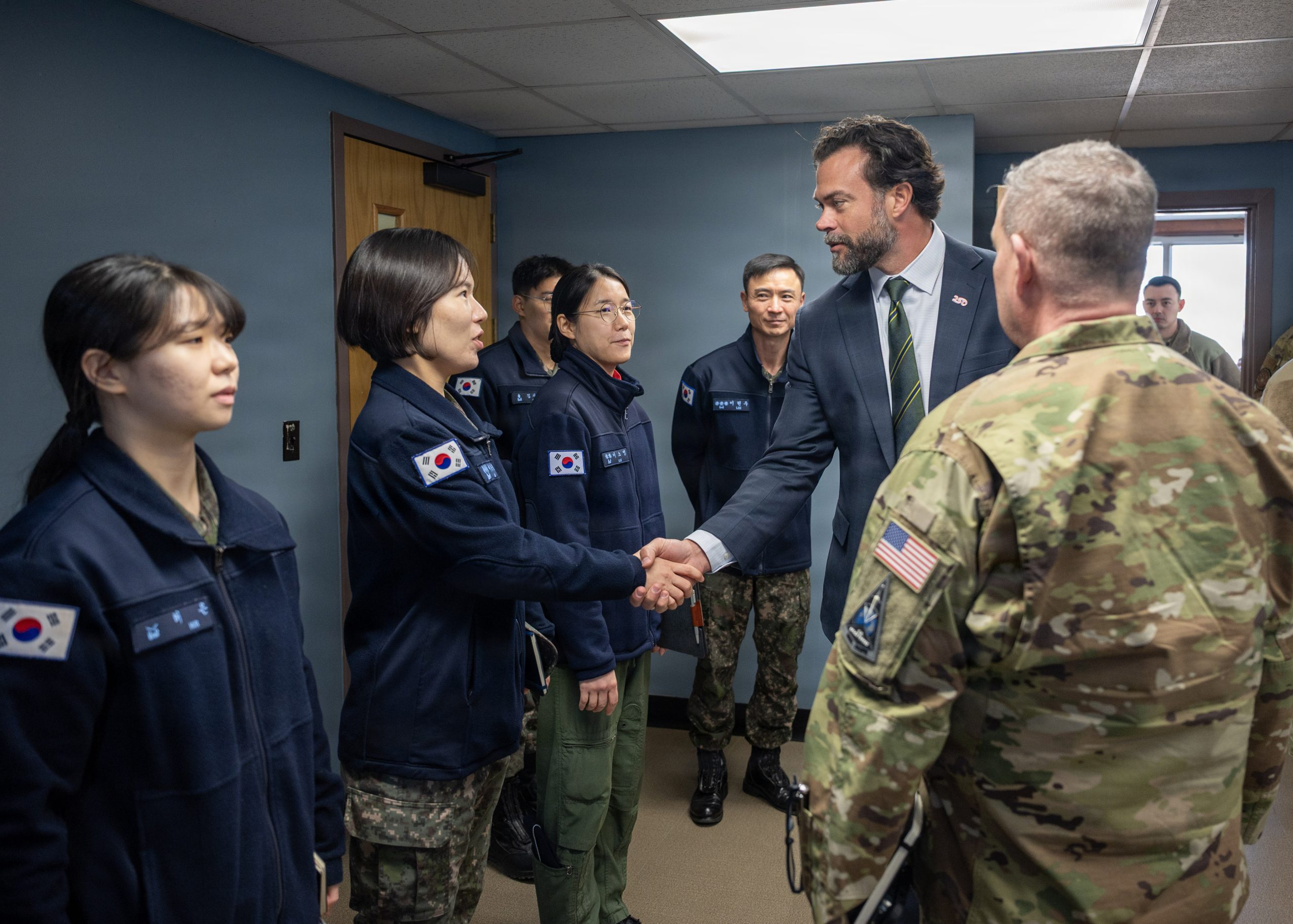
Under Secretary of the Air Force Matt Lohmeier takes a photo with Space Forces Korea Guardians at Osan Air Base, Republic of Korea, Jan. 30, 2026. Lohmeier’s visit is focused on engaging with Airmen and Guardians executing the mission across the Indo-Pacific, while also understanding the region’s operational challenges. (U.S. Air Force photo by Staff Sgt. Sarah Williams)U.S. Air Force Lt. Col. David Iverson, Seventh Air Force commander, greets Under Secretary of the Air Force Matt Lohmeier at Osan Air Base, Republic of Korea, Jan. 30, 2026. Lohmeier’s visit is focused on engaging with Airmen and Guardians executing the mission across the Indo-Pacific, while also understanding the region’s operational challenges. (U.S. Air Force photo by Staff Sgt. Sarah Williams)Under Secretary of the Air Force Matt Lohmeier meets with the U.S. Embassy at Osan Air Base, Republic of Korea, Jan. 30, 2026. Lohmeier’s visit is focused on engaging with Airmen and Guardians executing the mission across the Indo-Pacific, while also understanding the region’s operational challenges. (U.S. Air Force photo by Staff Sgt. Sarah Williams)Under Secretary of the Air Force Matt Lohmeier meets Republic of Korea air force Space Operations at Osan Air Base, Republic of Korea, Jan. 30, 2026. Lohmeier is visiting the Indo-Pacific to engage with Airmen, Guardians, allies, and partners and to see firsthand how Pacific Air Forces is postured to meet strategic challenges in the region. (U.S. Air Force photo by Staff Sgt. Sarah Williams)
By Bryan Grossman
US Air Force Academy Association of Graduates Checkpoints Magazine
On July 24, the U.S. Senate confirmed the Hon. Matthew Lohmeier ’06 as the 29th undersecretary of the United States Air Force. He now helps guide the department’s strategic direction at a time of rapid change in global defense and technology.
Working alongside Secretary of the Air Force Dr. Troy Meink, the undersecretary helps manage an annual budget of more than $200 billion to support nearly 700,000 airmen, guardians and civilian employees. He has made it clear that servicemember welfare, force readiness and modernization are among his top priorities.
“Our airmen and guardians sacrifice a great deal to serve the American people,” Undersecretary Lohmeier said following his confirmation. “They deserve all of the best tools, training and support they need to perform their missions in an increasingly complex and quickly evolving threat environment. I’m honored to work alongside Secretary Meink in service of these great men and women.”
The Department of the Air Force’s newest undersecretary recently returned to his alma mater and sat down with the Checkpoints team for a Q&A.
Watch:
The following is a lightly edited transcript of that conversation, which occurred Oct. 31, 2025.
What are your top priorities as the undersecretary of the Air Force?
My top priority is readiness. I’ve had many months to think about what those priorities should be, and they’ve admittedly continued to morph and develop over time.
But spending the last several months in this seat has driven home the necessity of a focus on readiness, and I think that fits really neatly within the secretary of the Air Force’s priorities.
He recently mentioned at the Air & Space Forces Association [conference] that he’s going to have a focus on modernization, readiness and people. And there’s always a tension between modernization and readiness, but I think you have to have a laser focus on readiness.
We’ve got a trend that needs to be fixed, and it’s a readiness trend, and so that’ll be my primary focus.
You’ve served as both an airman and guardian. How have those perspectives shaped your leadership philosophy as undersecretary of the Air Force?
The air domain and the space domain are admittedly very different. They require a unique skill set and a unique mindset in each of those domains to successfully operate as warfighters in those domains. And yet, I think my leadership view or philosophy appropriately transcends specific military services and domains.
What I mean by that is I think that any military leader, regardless of the domain they operate in, is required to possess — whatever their training was and whatever their skill set was — integrity, authenticity, care for other people and an ability to articulate the mission that we invest all of our time and energy into.
And whether I was in the Air Force on the one hand, or the Space Force, later in my career, the best leaders that I had, I thought had a good blend of those qualities, and the leaders that I thought had room for improvement somehow were lacking in those things.
And my emphasis, in fact, while I’m the undersecretary and in working with all of our uniformed leaders, will be to emphasize things like integrity and authenticity and an ability to articulate the mission.
What do you believe are the biggest challenges facing the Air Force and Space Force in the next decade?
I’ve got a couple of ways to answer that, and I’ll start with where we began, which is readiness. Readiness is one of the biggest challenges the Air and Space Forces have.
Part of that’s budget-related, of course, part of it is the competition between fielding new capabilities, modernization efforts and keeping healthy the systems that we already operate.
Readiness is a perennial problem. It’s a challenge that the Air Force has had throughout its history. Of course, the older those systems get, the more difficult that challenge becomes.
On the other hand, it’s the uniqueness of the character of war in the 21st century and the complexity of the threat that we face on the world stage. We are not just facing a single adversary at home or abroad. We’ve got a complex blend of competitors, adversaries, bad actors who seek to undermine the political sovereignty and legitimacy of our country.
And all of our troops who sign up to put on the uniform and defend the Constitution need to grow into an appropriate, healthy understanding for the complexity of that threat.
I think one of the challenges that we’re going to have during this administration, as we come up with a new national defense strategy, for example, and the War Department continues to try and educate the force about its priorities, is to educate the force about the uniqueness of the challenges that we face.
Your background includes experiences in strategy, policy and operations. How do you intend to apply that strategic mindset to address the current challenges facing the Air Force and Space Force?
I had a good opportunity to — it was one of my favorite assignments — attend the School of Advanced Air and Space Studies. You mentioned strategy right out the gate.
It’s a strategy school, and their approach to learning and thinking was to sit around a table and to discuss disparate views about things, ideas, books that we had just encountered as warfighters.
When we come around the table and we discuss disparate views about what we had read, we would discuss unique ways of tackling the challenges that we face. And what that taught me in that environment, which was intended to produce strategists, was that it’s really important that we listen well to others’ views.
We listen well to possible solutions, and we come to some consensus or unity about how we can tackle those challenges. We have a lot of challenges in the strategic, complex environment that we find ourselves in right now.
We’ve got the need to listen to unique and innovative solutions to the problems that we face, and absent that listening, I don’t think any amount of experience in strategy or policy or operations is really going to help us much.
We have to find ways as a team to come together and find innovative ways to tackle these challenges. And I think we’ve got an excellent leadership team, at least in the Department of the Air Force, because that’s who I work with most closely, of course, but really across the entire joint force, from what I can tell, who are aware of the need to listen well to one another and find great ways to enable the entire joint force to be successful in this new threat environment.
You’ve emphasized the importance of service member welfare and service culture. What are your top priorities to support the well-being of the 700,000 airmen, guardians and civilian personnel under your care?
I’m going to echo something that Secretary Meink said — again, at AFA [Air & Space Forces Association conference]. Because of the uniqueness of the threat environment and because of the complexity of the capabilities that we are fielding, I think we have the challenge before us to provide adequate training to our warfighters to operate those capabilities and to operate within a rapidly evolving, technologically dynamic environment.
And so providing all of our people the right training and the right tools that they need to succeed, I think, is going to be tremendously important. So you do what you fund, and you have to think through and talk through and listen to the challenges that we have there, and then you fund appropriately the tools for our warfighters to make sure that they can succeed.
One of the things I saw on, I think it was day one or two of being in the seat, I got a briefing on Operation Midnight Hammer. I saw the great work that our airmen and guardians are capable of accomplishing when they have the right tools and the right guidance.
I don’t doubt their ability to accomplish any mission on the world stage. I do doubt, however, a bureaucracy’s ability to always provide them what they need to be successful.
So when you get the right leaders in the right seats who are able to work as a team to provide them those tools, I think our airmen and guardians are capable of tackling just about any challenge that they’ll face.
How will you work with the secretary of the Air Force, the chief of space operations and the next chief of staff of the Air Force to implement key policy decisions?
It’s important that we work well together. And for the record, I’ll say, Secretary Meink and I work very well together.
I’ve been in the seat for several months. We communicate clearly and often, and we’ve had a bit of a lag in getting an entirety of Air Force and Space Force uniformed leaders into the seat, but just recently, had our new chief of staff of the Air Force confirmed, and a new vice chief is on the way shortly, I hope.
It’s been great in the few months that I’ve been there, working with Chief of Staff of the Air Force [Gen.] Dave Allvin ’86, who’s retiring, but the “how” comes in the unity that the civilian and uniform team are going to bring to the fight, and knowing the relationship I’ve got already with the Space Force team and with Secretary Meink.
I fully anticipate that once our new chief of staff and vice chief of staff of the Air Force are in place, we’re going to be completely synced up with our priorities, and then it’s just a problem of communicating that well to the force, and it’s about selecting the right leaders and enabling them to communicate that to the force. I have no doubts that we’re going to be able to get that right.
One other point I want to make: I happen to know that our new chief of staff, [Gen. Ken] “Cruiser” Wilsbach, cares a great deal about readiness. I’m really happy to know that that’s been a focus of his while he was the commander of Air Combat Command, and I believe he’s going to bring that focus into the Air Force as the chief of staff, and so our priorities already align very nicely.
What specific modernization efforts do you believe are most urgent for maintaining technological and operational superiority in air and space domains?
Which modernization efforts are most important is almost like asking which of my children I love the most. There’s a lot of exciting things we’re doing. There are some that come to the forefront of just about everyone’s mind when you get a question like that.
The new F-47 is an exciting program. The president’s announced it. It’s going to fly before the end of this administration, I think. It’s going to bring an absolutely essential capability, from a power projection perspective, into the Pacific that we need, and that’s chief on the list.
There are other capabilities, of course, that come with that, or that complement the F-47 — the collaborative combat aircraft, of course, fits into the answer, because it’s an exciting complex next-generation capability as well that helps us integrate our long-range kill chain.
I’ll say that there are some exquisite — I hate throwing that term around too much — and exciting space capabilities that we’re trying to field as well that don’t get the attention that the air capabilities often get. We’ve got a lot of impressive, exciting things going on in space.
There was a point that was driven home to me recently. I went to an air show out at Andrews Air Force Base about a month ago. Everyone in the world wants to show up in air show and pet airplanes and watch them fly low and fast and perform their maneuvers. You can’t do a lot of that with our space capabilities.
So that’s an arena that I think requires a bit more education effort. We need to better articulate what it is we’re doing here, and we’re working on that, but we’re fielding capabilities, as Secretary Meink pointed out at AFA, right now in space that didn’t exist five years ago, and so there’s a lot of developments there that I think are going to be absolutely critical for our success in maintaining our advantage on the world stage.
What lessons have you learned in leadership since taking on this role that you wish you knew earlier in your career?
I think it’s important as a leader to listen well. When you can, and have the time, suspend judgment when there’s a lot on the line, especially when decisions can be fraught with emotion and a lot of parties are involved.
It’s really important to take time to gather data, to listen to all parties involved, to sleep on some things when you can afford to do so and, especially when it comes to senior leaders in the Air Force.
Now [when] making decisions, if and when possible, you have a united front that’s able to come to a mutual agreement about the decisions that we’re making and then throw our full weight behind that in communicating that to the force.
My sense is, the reason I’m answering the way that I have is because, in part, my sense is that we’ve been through a transition period here for about a year, and I haven’t been a part of the Air Force that entire year. But I think that what we’ve had is, people have felt like they’re in limbo.
There’s been a period of transition in which there’s been a new politically appointed civilian leadership that’s come in, and a lot of decision making has been suspended in the interim. The force needs clarity from leaders on the direction that we’re pursuing, and as we get a unified leadership team finally seated, I think we’ve had the time and data to reflect on the direction we want the force to go.
Now throwing all of our weight behind that and clearly communicating that’s going to be really essential to the success of the entire force.
There are some pretty weighty decisions that are being made, and no one person is going to make any of those decisions. There’s a leadership team for a reason, and there’s a uniform and a civilian component to that, and we’re all listening well, and we’re trying to be very thoughtful and deliberate about some of these critical decisions that we’re making that are going to impact the country for many years to come, and they certainly imminently impact the force, the people that serve in uniform.
So we’re trying to get those things right, but as long as it’s taken for some of those decisions, once we move out, we move out with alacrity, and we throw our full weight behind that, and that gives a sense of security to the troops that are actually working these programs, the problems, the training that they’re involved in on [a] day in and day out basis.
Oftentimes, I’m aware that they feel like there’s some thrash and that they’re at the end of a whip. And you can’t have that. You need to minimize that.
I will say this too: Intuition cannot be neglected. Judgment, gut judgment — that’s what I mean by intuition — shouldn’t be neglected as thoughtful as we need to be, as deliberate as we need to be, as serious as some of these decisions are.
When you get the right leaders in place at the local level, for example, I want them to have developed their sense for their mission and their people, so that they can make intuitive decisions with speed and take risk and move out.
That’s why we pay them the big dollars, because I know they do exceptionally important work. That’s why we trust them with leadership. That’s why they’re in command.
What inspired you to attend the U.S. Air Force Academy, and how did it shape your career path?
I was recruited to play basketball at the Air Force Academy. I didn’t know there was an Air Force Academy until I was recruited to play basketball.
God saw to it that I had the best basketball games of my life when the Air Force coaches were watching. I had some of the worst games of my life when other coaches were watching. And so it seemed it was destined that I’d come this direction.
But what inspired me to come here was, first of all, a really exciting exposure to cadet life. They didn’t show me much of the four-degree life. They showed me the football games and the rigor of the academic program here. And they foot-stomped integrity and “we do not lie, steal or cheat.” That was driven home while I was a high school student when I was first introduced.
The sense of purpose that cadets are initiated into when they go through basic training, that was really appealing, even to a young man who never had ambition for military service. I didn’t have parents that served.
Once they hooked me and I got here, then the question becomes, what kept me interested in an Air Force career?
It’s the same answer: It was my belief in the values that the institution was trying to instill in me as a young man, and I’ve shared publicly elsewhere, that, you know, I really learned to be honest while I was here, really for the first time in my life.
It’s not that I didn’t care about those things before I came here, but that there’s enough preaching that goes on here, so to speak, and enough good examples here that you, if you’re willing, learn to take it seriously for the first time in your life, and I did, and it shaped who I was.
I left one world behind. I came here to the wood between the worlds, to use C.S. Lewis’s phrase from The Chronicles of Narnia. This was a place of transition for me between worlds.
I left here and commissioned and went out into a new world, which was a commissioned officer in the Air Force, and I was a different person for it. And so I was inspired at first, because of the values that we teach here.
What were some of the biggest challenges you faced as a cadet?
The biggest challenges, you know, they strip everything away from you when you come here. Every young four-degree recognizes that when they come here, you lose some bit of your liberty.
You get your hair taken from you in the first place. You get all your clothes taken from you, and you get a new set of clothes. And that’s hard.
It’s hard to set aside what you perceived was your freedom to act and move and to speak freely, and you leave some of that behind to come here.
It’s all for good purpose, of course, but those are the biggest initial challenges.
You get that back, of course — the more lasting lessons that you learn are something that you only get after a whole four-year experience here. It wasn’t until I left here that I got to reflect on the difficulty of this place that I grew to appreciate it the most.
What was bitter at one time, and I’ll tell you a lot of the time you come back from a Thanksgiving or a Christmas break, it’s bitter to return to the Air Force Academy.
It’s difficult here, and all of that bitterness, put it that way, that’s the word that comes to mind, but the difficulty, the trial of the Air Force Academy, is somehow turned sweet with each passing year as you reflect on the experience that you’ve come through.
It was the same thing I went through a SERE training. It’s difficult. What challenges, what opportunities did you have there?
Well, you don’t really enjoy it when you go through survival, and evasion, and resistance and escape, you just don’t, and you get through it, and everyone goes out for dinner and talks about the thing they’ve just been through.
The more time you reflect on it, the more grateful you had the experience. You develop lifelong friends here, and you’ve been through the same hard things together, the same kinds of things.
This is an incubator of sorts, the same kinds of things you go through here, on a much more serious scale, you’ll go through as an officer at some point, leading troops in the Air Force or in the Space Force.
We’ve got real-world missions that we go out to lead, and something deep inside of you draws upon what you experienced here at USAFA and you’ve become more capable because of the leadership laboratory that is the Air Force Academy.
How did your time here at the Academy prepare you to lead throughout your career?
One way in which I think the Academy prepared me to lead when I left was that I had a few examples of other leaders from my time at the Academy who I tried to imitate.
I’ll share one example. For some reason, it’s an unlikely example. I don’t know why, but it was my cadet squadron [air officer commanding].
He was a helicopter pilot. I was the cadet squadron commander, I’ll add in. We were getting ready for an inspection, some inspection that you get ready for on a weekend, and we’re all making our beds, and we were folding our socks, and the cadet squadron AOC came in asked how my prep was going for the inspection.
I was living by myself; I didn’t have a roommate at the time that I was the cadet squadron commander.
He said, “How’s your prep going?”
I said, “It’s going great.” I was pretty satisfied with my progress. I thought I was going to be an impressive example to the other cadets of just how put together my room is.
He said, “How’s everyone else’s preparation coming along?”
I said I didn’t know.
And he asked me, “Why not?”
He says, “What’s your job here?”
I said, “I’m the cadet squadron commander.” I was pretty proud of that.
And he says, “How come you don’t know what the progress of the others is?”
I didn’t have a good answer. And he says he thought about going to help them. I said, “Yeah, maybe when I get my room put together, I’d be happy to go help other people.”
He says, “What do you think of this idea of service before self?”
I didn’t even think I agreed with his approach of like leaving my stuff behind to go help others. But he asked me then, because I knew he could tell I wasn’t buying in, he asked me if I’d consider stopping what I was doing to go help others.
First, I was bothered by it. Actually, I thought it was the wrong order of things. I needed to get my own house in order before helping others.
But he basically held my hand, so to speak, and walked me down the hall, showed me what it looks like to check in on others, make sure they’re getting ready before I took care of myself, and it’s been 21 years, I think, since I had that conversation, and I’ve reflected on it probably at some point every single year since leaving USAFA.
Again, to this day, I don’t know if I had the order right there, but he was trying to drive home a point, and it’s the idea of service before self, and I didn’t know what the status of the other people in my unit was. All I knew was how well I was doing on what I was working on.
I’ve occasionally had opportunity to reflect on whether or not I’ve got that priority right. Do I know how others are doing in my unit?
When I thought about it, when I was a squadron commander of a space-based missile warning squadron, how are my people doing?
It does no good if I think I’ve got all of my ducks in a row, but I don’t know how my people are doing, and so I had to ask myself, “How are they doing? Is there anything I can do to help them?” I’ll worry about some of my needs later.
You can’t always get it in that order, but something about the way in which he approached me — and he knew how to approach me about this — really struck a chord with me.
I think, at USAFA, you’ve got an opportunity as cadet squadron air officers commanding; you’ve got an opportunity as cadet squadron leadership.
We’ve got an opportunity as senior enlisted leaders at USAFA to influence very moldable young men and women who are 19 and 20 and 21 who are going to be future leaders of our Air Force.
We have great ways, great opportunities, to influence them and teach them what it means to be men and women of integrity and to serve others before themselves and be excellent in what they’re doing in ways that we just don’t have anywhere else in the Air Force.
This is a unique incubator, and so [I’m] really grateful for that time I had, and I’m sure that all of our cadets, many of them, if they’re applying themselves, have that same opportunity today.
If you could go back in time and offer Cadet Lohmeier advice, what would that be?
I don’t know if my answer will be satisfactory because questions like this are just really tough for me.
We all make good decisions and bad decisions. We all look back and wish we could have done something differently.
For example, I was in the end a social sciences major. There have been many times that I’ve thought I should have taken advantage of the aeronautical engineering program, for example, or done physics.
I study that stuff for fun in my free time now, and I can honestly say I’ve thought about regretting the decision to pursue the path that I did while I was here, but I don’t regret any bit of my journey.
There were good times and there were bad times, and they’ve all been an important part of my life journey.
I think the healthiest approach would be, I could go back and pat myself on the back and say, “You’re on the right path. And however hard things become each year, it’s OK, because it’s all a part of shaping who you’re going to be.”
If people have the right mentality, however many tours they march, or how many ever difficult classes they get in trouble with, or however high they think they’re flying while they’re here, things are going to change, and the wheel of fortune keeps turning, and you can’t always control the good and the bad that’s going to come your way, but we ought to reflect in gratitude on the things that are shaping us.
So, I don’t know if I would try and encourage the old me to change anything about my path. I’d simply encourage me to press on.
“You’re going to get it right and keep your values intact.
The things you’re learning here are correct — meaning integrity, service and excellence — and if you keep those things dialed in, come hell or high water, there’s going to be a way through.
You’ll be able to rely upon your peers to see through any challenge, and you’ll be able to make a positive impact on the world stage.”
What qualities do you believe Academy graduates must have today to meet the demands of modern service?
I’ll beat this drum happily for my entire time that I’m the undersecretary. It’s integrity, service and excellence.
This is the unique laboratory that trains cadets [that] those things really matter.
In fact, I plan to talk more about them as the months go on, because integrity isn’t just doing the right thing when nobody’s watching, it’s doing the right thing when everyone’s watching, and they don’t necessarily agree with you.
It’s somehow continuing to develop your character and then aligning your speech and your thought and your conduct outwardly with the inward conviction. And the Academy can do that exceptionally well for our future leaders.
After nearly two decades in uniform and a career as an author and speaker, what motivated you to return to federal service in this high-level civilian role?
I’ll say, probably more than anything, a sense of duty, because I was very happy to be a private citizen.
Being perfectly candid about it, I didn’t have ambition to return to government service, but the president asked me to serve, and I was happy to do that.
I believe in the direction we’re going as a department — we’ve got exceptionally challenging decisions that we’re facing and we’ve got a uniquely complex threat environment, as we’ve discussed earlier, and there is a real part of me that would actually like to leave to other poor souls to face those challenges and make the hard decisions and to enjoy private life as a citizen.
That’s why the state exists in the first place. It’s to protect the citizens so they can enjoy their private affairs.
Now I very much enjoy private affairs. I just went to Mount Vernon with my family recently and heard that George Washington was always seeking the next opportunity to get back to Mount Vernon and to tend his garden and to take care of matters at home, and yet was willing, out of a sense of duty, to serve the people.
In whatever small sphere of influence I have the opportunity, at present to occupy, it’s a sense of duty that draws me back into public service and I’m happy.
Having said all of that, and being candid about all of that, I’m genuinely happy to be here and really like the people I’m working with in Air Force and Space Force senior leadership. They’ve got their priorities intact. They’re really trying to serve the men and women in uniform.
I like working with Secretary Meink. The country should be grateful to have Secretary Meink as the secretary of the Air Force. He’s exceptionally bright. He’s very clear-eyed about the challenges we face, and he’s very thoughtful in his approach to how to solve those problems.
So I really couldn’t have asked for a better team of people to integrate into to do this job, which just sweetens the deal when I’ve made the decision ultimately to be a public servant.
Having said all of that, I really do look forward to the chance to return to being a private citizen someday and turning over the reins to other people and yet understand that there’s always the possibility that you’re asked to be a public servant in other ways. And so you weigh that, and you see if duty calls you to other directions.
Anything else you’d like to add that we didn’t touch on?
I’ll foot-stomp something that we’ve already talked about and it’s integrity. Something about that is deeply important to me.
I suppose what I’ll say about it is I’m grateful for the Air Force Academy experience, as hard as it was, as bitter as it was, to return year after year. I really believe in the program.
However, it’s changed over the years, whatever nuance that any leadership team brings to the Academy program.
I really believe in what we’re doing here, so I want to cheer on all of our cadets [to] learn earlier in life than later that your integrity matters, because it’s something that even after you put down the uniform, you will take with you the rest of your life, and you can do great things in your sphere of influence if you’ve got your integrity intact, and you can destroy a great many things if you don’t.
And so I want to share that, and if there’s anything I leave behind as a legacy — I’m at the very beginning of my tenure — but I really hope to beat this drum early and often, so that when I leave someday, people recognize that I actually focused on integrity while I was here, and authentic leadership that’s fueled by integrity.
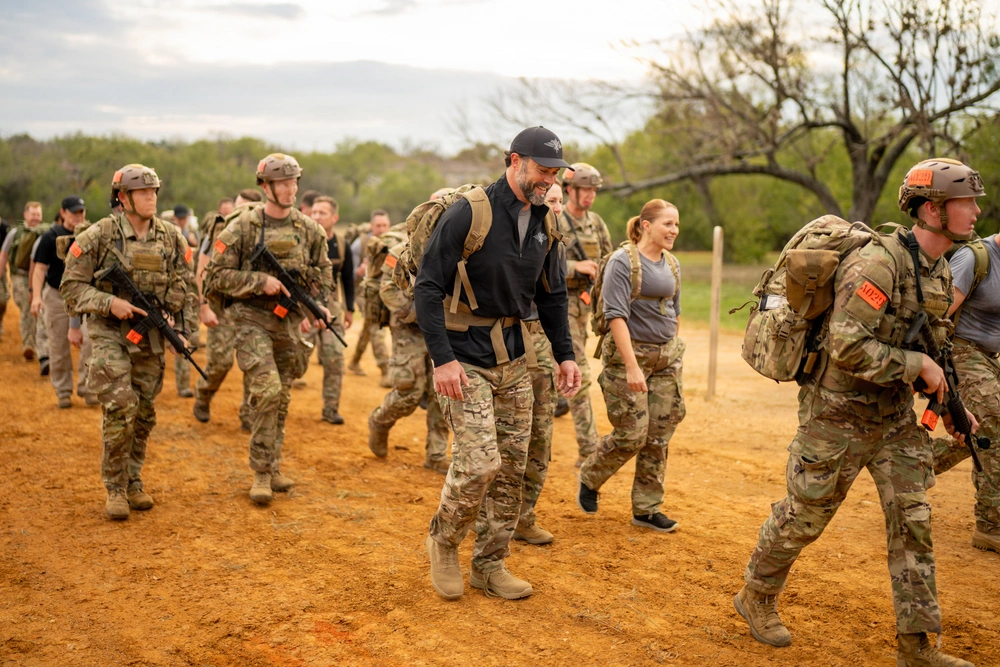
(DVIDS) CHAPMAN TRAINING ANNEX, Texas — The Special Warfare Training Wing (SWTW) welcomed the Under Secretary of the Air Force, Mr. Matthew Lohmeier, for an early morning ruck with the inaugural Zulu Course on Friday, Dec. 5. The visit highlighted the wing’s continued progress in pipeline optimization and demonstrated Air Force Special Warfare’s (AFSPECWAR) strong focus on fitness.
Physical training and readiness have always been a foundational cornerstone for AFSPECWAR. Strength training, cardiovascular conditioning, and water confidence are the daily standard for Special Warfare trainees and operators.
Mr. Lohmeier met with cadre and trainees at 0700 for a ruck and physical training session designed to showcase the intensity, discipline and teamwork that define the Zulu Course. The Zulu Course is the new common skills training block that train the foundational competencies across all AFSPECWAR career fields, Combat Control, Pararescue, Tactical Air Control Party, Special Reconnaissance, and their respective officer careers.
Throughout the morning ruck, Lohmeier observed cadre-led instruction, spoke with Airmen about their experience in the revitalized pipeline. He emphasized that the Department of the Air Force remains committed to ensuring the AFSPECWAR enterprise receives the resources and stability needed to meet global mission demands.
The Zulu Course is one of the most significant outcomes of the SWTW’s Pipeline Optimization effort, a multi-year plan to streamline training flow, increase throughput, and align curriculum with operational requirements. The Zulu Course brings together skillsets that were previously taught at multiple locations into a single, cohesive program that’s focused on the basic skills of shoot, move, communicate, casualty care, advanced insertion/extraction skills, individual skills, and small team operations. The course is taught by instructors with operational experience across the AFSPECWAR enterprise, combining expertise from multiple career fields to deliver holistic training.
After the physical training session, which ended with AFSPECWAR’s traditional memorial pushups, Mr. Lohmeier praised both the students’ grit and the wing’s rapid improvements over the past year.
“The motivation I saw with these trainees is exactly what the Department needs,” Lohmeier said. “I loved the chance to get out with the Airmen who are doing some of the real warrior work – it represents a tangible example of peace through strength. I’m impressed by the wing’s initiative to combine “1Z” and “19Z” initial training for effective interoperability and 21st century warfare.”
Wing leadership echoed the Under Secretary’s confidence.
“This was a tremendous opportunity to display the SWTW’s high standards and culture of fitness. Those roots run deep and we carry on the legacy of those that came before us,” said Col. Kaveri Crum, commander of the SWTW. “Mr. Lohmeier’s visit reaffirms that we are moving in the right direction.”
The Under Secretary’s visit concluded in a discussion with wing leadership on the long-term vision for strengthening Special Warfare talent development.
“The work happening here matters,” Lohmeier said. “The Special Warfare Training Wing is leading the way in shaping the warriors our nation relies on. I’m proud to see these initiatives, and I look forward to what comes next.”
(USAF Press Release) Under Secretary of the Air Force Matthew Lohmeier visited Columbus Air Force Base Nov. 20 to engage with Airmen, gain insight into modernization initiatives, and reinforce the importance of readiness across the force.
The visit focused on three primary themes: modernization, readiness and people. Through mission briefings, facility tours and small-group discussions, Lohmeier received a first-hand look at the essential role Columbus AFB plays in developing the Air Force’s next generation of pilots.
Reflecting on his own experience as a first assignment instructor pilot, Lohmeier shared advice with student pilots:
“Aside from merit and aptitude, the pilot who showed up every day with a great attitude and a driven work ethic always did exceptionally well. I encourage young Airmen to show up with the right attitude and be ready to work hard.”
During a briefing on the Future of Undergraduate Pilot Training initiative, the under secretary received updates on how Columbus AFB is modernizing training through new technologies, improved syllabi and data-driven processes.
Readiness remained one of his primary talking points throughout the visit. “I will echo Secretary Meink’s priorities: modernization, readiness and people,” he said. “For me, I’m throwing my weight into readiness. We must ensure our warfighters can operate in a rapidly evolving, technologically dynamic environment.”
In addition to mission-focused engagements, Lohmeier toured enlisted and officer dormitories and on-base housing. He met with the base’s Dorm of the Quarter winner and discussed efforts to elevate Airmen quality of life. These visits allowed him to assess living conditions first-hand and identify potential areas for improvement.
Lohmeier also participated in a morning workout with student pilots and base leadership, reinforcing the importance of fitness, discipline and camaraderie.
He later served as the guest speaker for the pilot graduation ceremony, sharing guidance as the graduates prepared to advance to the next stage of their training. He emphasized the importance of intangible characteristics, reminding the class,
“If you keep your character intact, and you pursue integrity first and excellence in your service, you will be successful in your career.”
Lohmeier’s visit underscored the vital role Columbus AFB plays in training the world’s greatest aviators and reaffirmed the Air Force’s commitment to modernization, readiness and the well-being of its Airmen.
On July 24, the United States Senate confirmed former lieutenant colonel Matthew Lohmeier as the 29th Undersecretary of the United States Air Force.
A 2006 USAFA graduate, Lohmeier brings service experience spanning aviation, space operations, strategic planning and senior leadership. His appointment places him in a top civilian leadership role at a time when the Air Force and Space Force are evolving to meet modern defense challenges.
Lohmeier assumes a critical role within the Department of the Air Force, working alongside Secretary of the Air Force Dr. Troy Meink. As Undersecretary of the Air Force, Lohmeier is responsible for managing the day to day activity of the Department of the Air Force, which includes an annual budget of over $200 billion and providing oversight for nearly 700,000 military personnel, civilian employees and their families.
His role includes policy development, budgetary planning, personnel management and support for modernization initiatives that span both the Air Force and Space Force.
“Our airmen and guardians sacrifice a great deal to serve the American people,” Lohmeier said in a news release the day he was confirmed.
“They deserve all of the best tools, training and support they need to perform their missions in an increasingly complex and quickly evolving threat environment. I’m honored to work alongside Secretary Meink in service of these great men and women.”
Secretary Meink said, “I’d like to welcome Matt to the team. His prior service makes him an excellent fit to help us strengthen the readiness and warrior ethos of the Air and Space Forces in order to defend our nation. I’m impressed by his dedication and focus on service culture and grateful for his advocacy for Department resources and modernization, and I know he will be a great asset to our Total Force airmen, guardians, and military families.”
Lohmeier began his military career as a fighter pilot, logging over 1,200 flight hours in the T-38 and F-15C, including missions that supported national defense objectives and international security commitments.
His early career was marked by rapid advancement, including promotion to lieutenant colonel two years below the zone. In addition to his flying career, Lohmeier consistently earned academic and professional honors.
He was named a distinguished graduate at several different U.S. Air Force professional military education programs, laying a foundation for his transition into strategic roles within the military.
In 2015, Lohmeier shifted from flight operations to space operations — a growing field within the Department of the Air Force. Assigned to Buckley Air Force Base in Aurora, Colorado (now Buckley Space Force Base), he served as chief of training for the 460th Operations Support Squadron.
There, he led the development and implementation of the Standardized Space Trainer, a simulation-based program designed to prepare space operators for real-world missile warning scenarios. The system enhanced mission readiness and contributed to the effective training of space professionals in a rapidly advancing operational environment.
Lohmeier became one of the first officers to transfer into the U.S. Space Force, taking command of the 11th Space Warning Squadron in October 2020. The squadron, headquartered at Buckley, is responsible for global missile warning and tracking — a mission critical to both homeland defense and international stability.
Under his leadership, the squadron played a key role in supporting national security objectives and was later recognized as the Space Force’s top-performing unit in 2024.
After concluding his active-duty service in September 2021, Lohmeier continued to contribute to defense and leadership discussions in civilian life. He became a public speaker on military leadership and culture and strategic development.
Lohmeier’s academic background includes a bachelor’s degree from USAFA in social science with a minor in Mandarin Chinese. He later earned a master degrees in military operational art and science and a Master of Philosophy in Military Strategy from the School of Advanced Air and Space Studies, one of the DoD’s premier strategy schools.
Nominated for Undersecretary in February by President Donald Trump, Lohmeier, during his Senate confirmation process, outlined his priorities, including advancing the Air Force’s nuclear modernization programs, supporting the development of next-generation fighter aircraft, and overseeing the creation of resilient space-based infrastructure capable of withstanding modern threats. He highlighted the integration of air and space capabilities as a key pillar of U.S. defense strategy.
In addition to his military and civilian accomplishments, Lohmeier is known for his involvement in professional development and education initiatives. He has spoken at a variety of defense forums, universities and industry events, focusing on topics such as leadership in high-pressure environments, the future of space operations, and the role of strategic thinking in national security.
He recently served as executive vice president of Stand Together Against Racism and Radicalism in the Services (STARRS).
Originally from Tucson, Arizona, Lohmeier now resides in Arlington, Virginia, with his wife, Sara, and their children.
Career Highlights
More than 1,200 flight hours in T-38 and F-15C aircraft
Named distinguished graduate at four U.S. Air Force educational institutions
Developed the Standardized Space Trainer for space operations readiness
Commander of the 11th Space Warning Squadron, overseeing global missile warning
Former executive vice president of STARRS
Earned a Master of Philosophy in Military Strategy from SAASS